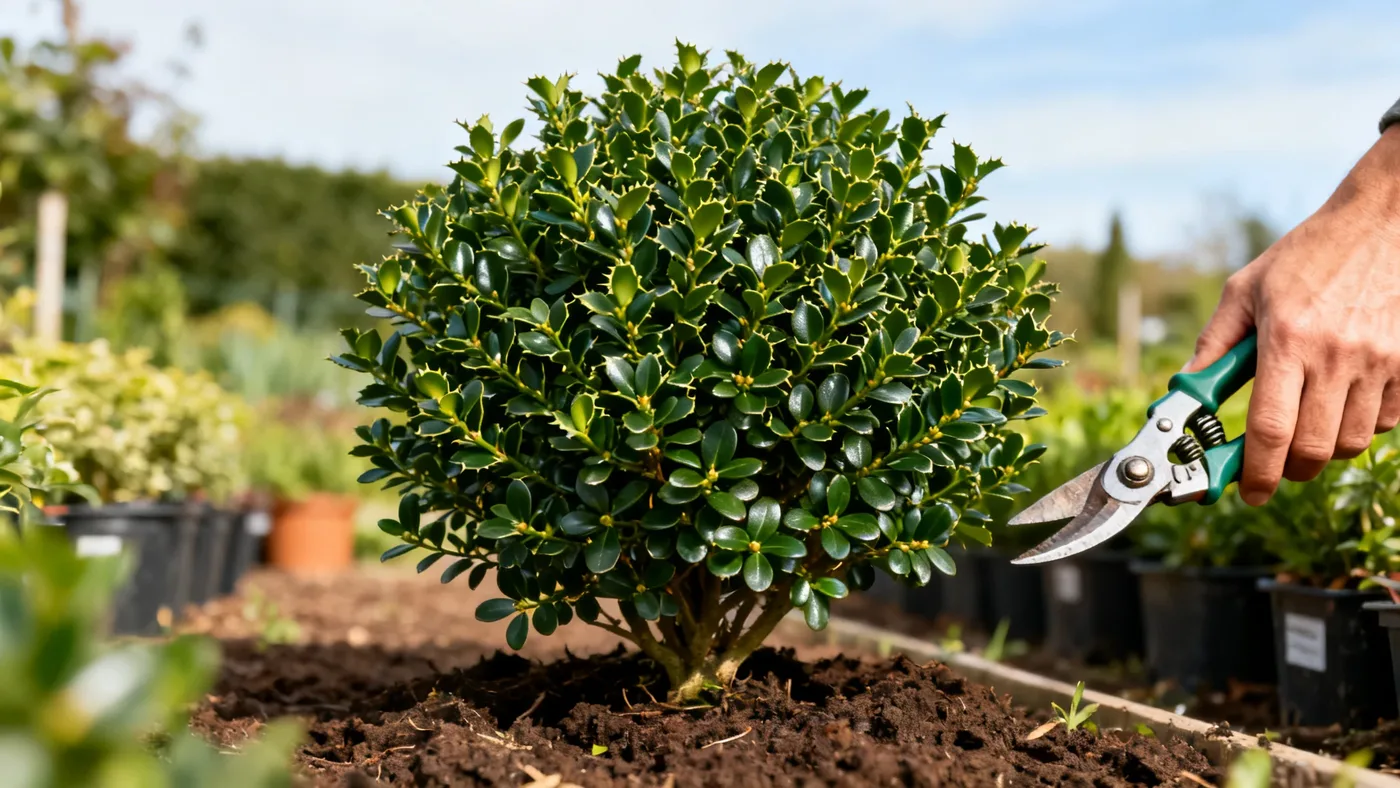
How to Prune Compact Japanese Holly for a Neat, Tight Shape
Compact Japanese Holly earns its place in formal landscapes and foundation plantings because it holds a tidy, dense form. But that manicured look doesn't happen by accident. Regular pruning, done at the right time with the right tools, is what keeps your holly looking dense and intentional instead of shaggy or overgrown. Whether you're maintaining a low clipped hedge or keeping a specimen plant in bounds, the techniques are straightforward and forgiving.
When to Prune Compact Japanese Holly
Timing is everything if you want your hollies to respond with dense new growth. The primary pruning window is late winter to early spring, before new growth flushes in late spring. This usually means late February through March in most zones within the plant's range of Zones 6 to 8. Pruning at this moment removes old wood just as the plant is preparing to push fresh foliage, so you get quick recovery and a full, thick appearance by summer.
You can also give your hollies a light second shearing in early summer if they need to be tidied up or shaped after their spring growth surge. This second prune should be gentler than the first one. Late summer or fall pruning is best avoided, as it can stimulate tender new growth that may not harden off before winter and may suffer dieback in harsh, windy sites.
For renewal pruning on older or leggy plants, late winter to early spring is still your window. Compact Japanese Holly responds well to heavy renewal cuts, which can rejuvenate an overgrown specimen and restore density from the base up.
Tools You'll Need
Having the right tools makes the work cleaner, faster, and more effective. You don't need an elaborate collection, but quality and sharpness matter.
- Hand pruners (bypass secateurs): For cutting individual stems up to about 1/4 inch diameter. Bypass pruners make cleaner cuts than anvil types and are easier on your hands.
- Hedge shears (manual): For shearing larger areas and clipping new growth to shape. A 20 to 24-inch blade is standard and manageable.
- Lopping shears: Optional, but useful if you're thinning out older, thicker wood inside the plant.
- Pruning saw: For any thick, woody stems too large for shears. Not always needed on younger plants.
- Garden gloves: Leather or nitrile gloves protect your hands from rough stems and pruning edges.
- Pruning sealer or wound dressing: Not necessary. Compact Japanese Holly closes over cuts naturally; sealing is optional and often left out in modern practice.
Before you start, clean your tools with rubbing alcohol or a 10% bleach solution to prevent disease spread between plants.
Hand Pruning vs. Shearing: Which Method to Use
These two approaches accomplish different goals, and many gardeners use both depending on the situation.
Hand pruning means removing individual stems or branches with hand pruners or lopping shears. This method gives you fine control over the plant's shape and is ideal for selective removal of wayward shoots, crossing branches, or interior growth that isn't contributing to the form. It's also the gentler option and takes more time.
Shearing means using hedge shears to clip off new growth across the entire surface of the plant, creating a smooth, manicured face. Shearing is faster, produces a denser outer shell, and is the go-to method for formal hedges. The trade-off is that you have less control over individual stems, and shearing always removes some live foliage, which is fine during the growing season but less desirable in late fall or winter.
Many gardeners do both. They hand-prune in early spring to remove old wood and shape the plant, then shear the surface in late spring or early summer to refine the outline and encourage density.
Step-by-Step Hand Pruning Instructions
Hand pruning is where you build the framework of your plant. This is your first pass, usually in late winter or early spring.
- Assess the plant. Walk around it from all angles. Note any dead wood (gray or brown stems with no living foliage), crossing branches, or stems that stick out obviously from the desired outline.
- Remove dead or diseased wood. Make cuts flush to the branch collar (the slight swelling where a branch meets the main stem). Dead wood won't regrow, so removing it opens up space for living stems.
- Thin the interior. If the plant is dense or overgrown, reach inside and remove some of the older stems to open up airflow and light penetration. This reduces disease pressure and encourages new growth from the interior base.
- Cut back wayward stems. Any branch that extends significantly beyond the overall outline should be cut back. Make your cut just above a leaf or bud, angling away from the bud so water runs off.
- Shape the base and sides. For hedges, step back frequently and look at the overall profile. Cut the sides back slightly wider at the bottom than at the top, creating a slight A-shape or trapezoid. This form allows light to reach lower foliage and keeps the hedge denser throughout its height.
- Don't scalp the plant. Resist the temptation to cut into old, leafless wood. Compact Japanese Holly is slow-growing, roughly 3 to 6 inches per year, so aggressive hand pruning now means slow recovery. Make moderate cuts and let the plant catch up through the season.
Step-by-Step Shearing Instructions
Shearing is typically done after hand pruning, or as a standalone refresh in early summer. The goal is a clean, even surface.
- Wait for a calm day. Wind makes it hard to see what you're cutting and uncomfortable to work.
- Establish a sight line. Stand back and mentally mark the outline you want. For a formal hedge, aim for a straight top and even sides. For a specimen, an informal mound or dome works well.
- Start at the base. Work your shears along the bottom edge of the plant, clipping off new growth. Keep the shear blade parallel to the slope of the plant.
- Move upward and outward. Gradually work your way up the sides and toward the top, making horizontal or slightly angled passes. Shear in one direction (usually away from your body) and let the clippings fall.
- Check your progress often. Step back every few minutes to see if the shape is even. It's easy to take off too much on one side without realizing.
- Tackle the top last. This is the most visible part. Take your time and make multiple light passes rather than one heavy cut. For a formal hedge, aim for a flat or slightly rounded top.
- Don't shear into old wood. If you need to cut more than the current year's growth, slow down and evaluate whether you should stop or switch to hand pruning for a gentler approach.
Tips for Maintaining a Neat Shape Year-Round
Light management. Compact Japanese Holly grows densest in full sun to light shade. If your plant is in deeper shade or crowded by taller plantings, it may become leggy or sparse. Pruning can only do so much to compensate for poor light. Make sure your holly gets at least 4 to 6 hours of direct sun for best density.
Don't wait between prunings. Waiting years between pruning sessions means larger cuts and longer recovery. Annual or biennial pruning keeps the plant responding vigorously and maintains density without shock.
Use sharp tools. Dull shears crush stems instead of cutting them cleanly, leaving ragged edges that are vulnerable to disease. Sharpen your shears or hand pruners at least once a year, more if you prune frequently.
Feed lightly. After pruning, your plant will push new growth. A light application of balanced or acid-forming (holly or azalea type) fertilizer in early spring supports that flush. Avoid over-fertilizing, which produces soft, tender growth that's harder to shape and more prone to pest and disease problems.
Water after pruning. Freshly pruned plants benefit from consistent moisture as they recover and regrow. If spring is dry, water once or twice per week to maintain moderate soil moisture.
Common Pruning Mistakes to Avoid
Pruning too late in the year. Late-summer or fall pruning triggers tender new growth that doesn't harden off in time for winter cold. Frost damage and dieback are common results, especially on exposed, windy sites where the foliage may also bronze slightly even on mature plants. Stick to your late-winter-to-early-summer window.
Cutting into old, bare wood. Once a stem has been bare and leafless for a season or two, it's unlikely to regrow. You'll be left with a gap that takes years to fill in. Focus on removing only the outer foliage and new growth unless you're doing heavy renewal pruning on a very overgrown plant, in which case patience is essential.
Creating flat tops with no slope. A perfectly flat hedge top allows rain and snow to sit on it, creating a heavier load and a breeding ground for fungi. A slight rounded or peaked top sheds water and stays healthier. For hedges, slope the sides inward slightly toward the top, creating a trapezoid profile when viewed from the side.
Shearing all at once without checking. The temptation to power through and finish in one pass is real, but you almost always end up cutting unevenly. Make multiple passes, step back frequently, and let your eye guide you.
Neglecting the interior. Shearing only the surface creates a dense outer shell with hollow, weak growth inside. Every few years, do some hand thinning of interior branches to maintain structure and airflow throughout the plant.
What to Expect After Pruning
Recovery depends on how much you removed and when you pruned. If you hand-pruned in late winter to early spring before new growth flushes, expect visible new foliage within 3 to 4 weeks as temperatures warm and day length increases. This new growth fills in the plant and restores density.
Light shearing in early summer may show recovery within 1 to 2 weeks during the peak growing season. Since Compact Japanese Holly is a slow grower at roughly 3 to 6 inches per year, don't expect dramatic size increase, but the form should tighten and look more refined.
On mature plants that have reached their full height of 3 to 4 feet, regular pruning maintains size rather than increasing it. Over many years of regular shearing, some plants may grow to 5 feet if left completely uncut, but typical landscape specimens stay closer to 3 to 4 feet when pruned annually.
If you did heavy renewal pruning to remove dead or overgrown wood, recovery takes longer and may be visible as sparse, open growth for one season before density returns. Be patient. The plant is rebuilding from inside out, and it's worth the wait for a rejuvenated, healthy specimen.
Quick Reference: Pruning Checklist
| Task | Timing | Details |
|---|---|---|
| Hand pruning (primary) | Late winter to early spring | Remove dead wood, thin interior, shape; before new growth flushes |
| Shearing (optional second pass) | Early summer | Clip outer surface for clean outline; lighter touch than spring |
| Renewal pruning (if needed) | Late winter to early spring | Heavy cuts into older wood to rejuvenate leggy plants; expect slower recovery |
| Avoid pruning | Late summer or fall | New growth won't harden off; frost damage and dieback risk |
| Sharpen tools | At least annually | Before or between major pruning sessions |
| Thinning interior wood | Every 2-3 years | During hand pruning, to maintain airflow and density |
For more detail on caring for your holly year-round, see our Compact Japanese Holly care guide. If you're just getting started with a young plant, our planting guide covers site selection and establishment care that sets the foundation for easy pruning later.