How to Revive an Overgrown or Leggy Compact Japanese Holly
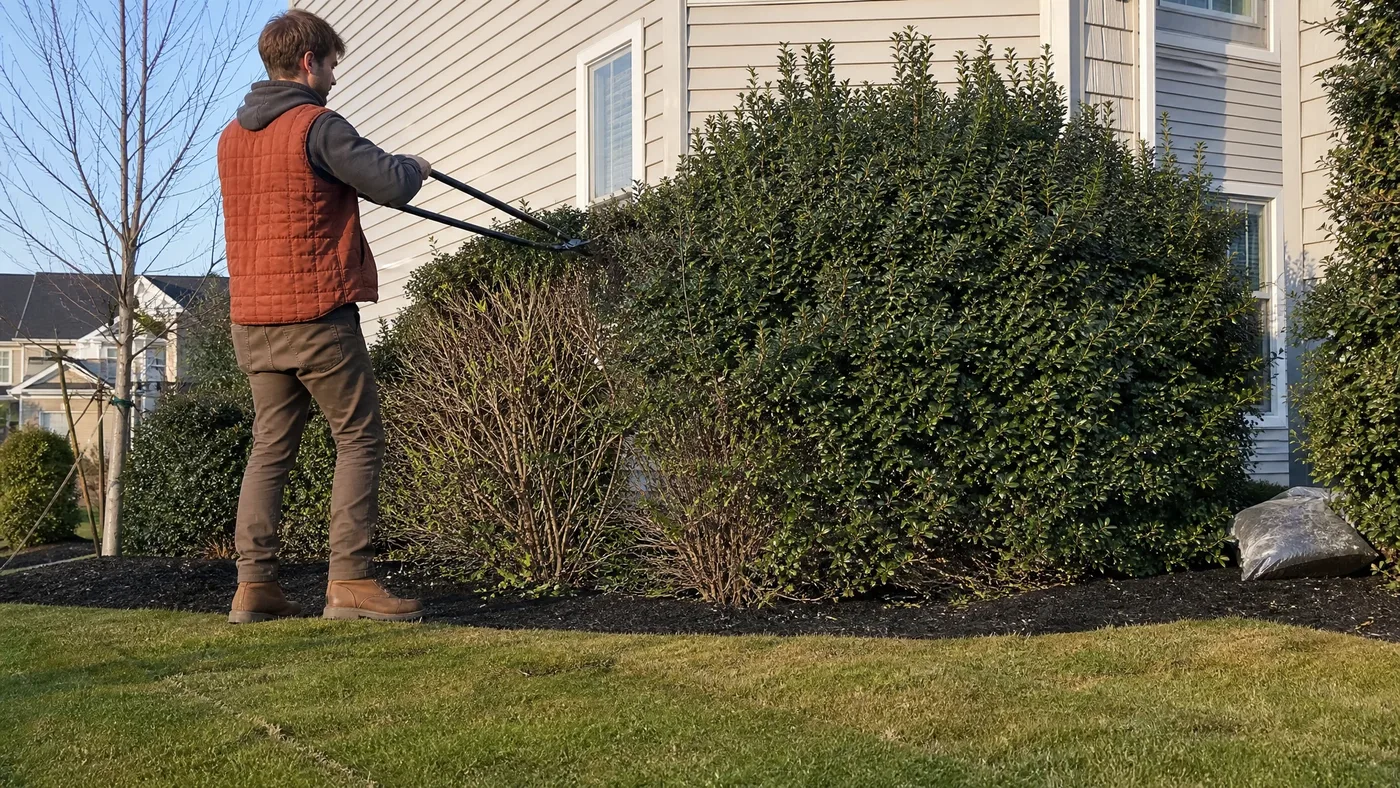
Run your palm over a healthy Compact Japanese Holly and you feel small, glossy leaves packed so tightly the shrub pushes back like a firm green cushion. Now reach into one that has gone years without shearing. Your hand slips past a thin skin of leaves into a hollow of gray, twiggy stems.
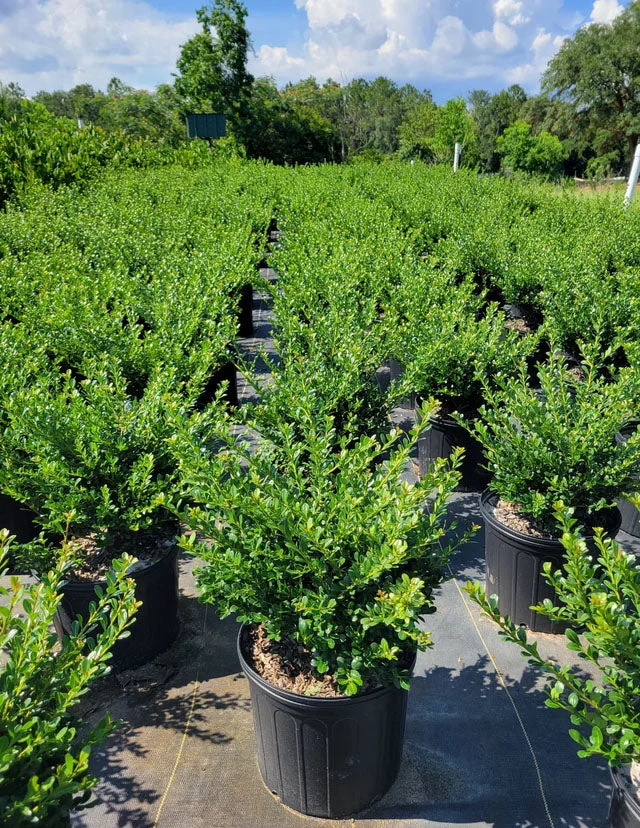
This evergreen comes from Japan and Korea, and it grows as a dense, multi-stemmed shrub that sprouts readily and takes pruning well. That ancestry is why most tired plants can be rescued rather than ripped out. Left alone, though, a holly keeps its leaves on the outside and slowly turns into a green shell.
We'll walk you through reading what your plant is showing you, from a bare center to whippy shoots to sheer bulk, then the cuts that fix each problem, how far back is safe, and a staged plan with the signs of recovery to watch for.
When Your Compact Japanese Holly Looks Bare Inside
A hollow center has a simple cause. Here is how to recognize it, why it happens and which cut fixes it.
What You See
The outer surface still looks neat from the street. Part the foliage with your hands, though, and you find bare, gray-brown stems with a few leaves at the very tips.
Nothing is wrong with the roots or the soil here. The plant has simply moved all of its leafy growth to where the light is.
Why It Happens
Years of shearing the surface, or years of no pruning at all, build a dense outer layer of leaves that shades everything behind it. Compact Japanese Holly wants full sun, which means six or more hours of direct light a day, and leaves that sit in permanent shade drop off.
Once they are gone, the bare twigs rarely refill on their own. Our sun and shade guide explains how much light the rest of the plant needs.
The Cut That Fixes It
Do not shear harder. Reach in and cut several of the outermost stems back to a fork or junction well inside the canopy. That opens windows so light reaches the bare wood, and buds along those older stems start to wake up.
Spread the openings evenly around the shrub and leave the rest of the outer shell in place for now. One careful pass of this kind does more good than any amount of surface clipping.
Whippy Shoots Reaching for Light on Compact Japanese Holly
Long, thin shoots that stick out past the outline of the shrub tell you the plant is searching for light. They are easy to fix once you know what they are.
Spotting Stretched Growth
Healthy new growth on this holly is short-jointed, with small leaves tightly spaced along the stem. Stretched shoots look different. The leaves sit far apart on a thin, pale stem that arches or leans toward the nearest opening.
We often see this on plants tucked against a tall wall or under a tree canopy, and on any plant that missed a year or two of trimming.
Cutting Back to Dense Wood
Follow each whippy shoot down the stem until the leaves become close together again, and make your cut there, just above a leaf. The new shoot that grows from that spot will be shorter-jointed and stockier. If a long shoot has no dense section at all, cut it back to the main branch it grows from.
Use hand pruners rather than hedge shears so you choose each cut. Then ask why the plant stretched. If it sits in heavy shade, the same shoots will return, and a sunnier spot may be the real fix.
A Shrub Twice the Size You Bought
Many people plant this holly beside a door or window because it is sold as a compact shrub. Years later it blocks the glass. First work out whether yours is merely big or truly oversized.
Know Your Plant's Natural Limits
'Compacta' grows 6 to 8 feet tall and 6 to 10 feet wide, with a medium growth rate. That is bigger than many people expect from a "compact" plant.
If your shrub has simply reached that range, it is behaving normally and needs reducing, not rescuing. Our size and growth rate guide covers what to expect over the years.
When and How Much to Reduce
Make the big cuts in late winter or early spring, just before growth starts, so the plant has the whole season to refill. Decide the height and width you want, then cut toward that line in stages, taking the tallest and widest growth first.
Always leave leafy twigs on every branch you shorten, because a branch cut to bare wood may never sprout. Do not try to reach your target in one year.
Shaping as You Reduce
Cut the top to a level, uniform height so the new growth comes in even. Leave the base a little wider than the top so light reaches the lower branches. A top wider than the base shades the bottom again and brings the hollow back within a few seasons.
How Far Back Compact Japanese Holly Will Forgive a Cut
This plant is more forgiving than most evergreens, but it has a limit. Knowing where that limit sits keeps a rescue from becoming a funeral.
What the Sources Say
Oregon State notes that Japanese holly withstands severe pruning, and the species can be severely pruned to manage its size. Hard cuts are a legitimate tool here, not a gamble, as long as you respect the next rule.
Where to Stop
Stop where you can still find leaves or live buds on the branch. A branch cut back below every leaf is a gamble, and a thick old trunk with no foliage at all is the biggest gamble of the lot.
Some advice says to chop an overgrown holly down to a few stumps and let it start over. We do not follow that. A healthy plant with half its leaves is a far safer bet than a bare one waiting for buds that may not come.
Telling Live Wood From Dead
Scratch a twig with a fingernail. Green and moist under the bark means it is alive, while brown and dry means that stem is finished and can come out entirely. Check several stems across the plant before you decide how deep to cut.
Spreading the Rescue Over Three Seasons
Because the plant needs leaves to feed its recovery, we split a serious renovation into stages. Each stage removes only what the shrub can replace before the next cuts begin.
This table shows the plan we suggest for a badly overgrown plant. A mildly leggy one may need only the first row.
| Year | What to cut | What to watch for |
|---|---|---|
| Year one, late winter | Open the center and remove the tallest, worst growth | Buds on exposed stems and fresh shoots from cuts |
| Year two, late winter | Reduce height and width toward the size you want | Even refilling on the sides and a full top |
| Year three, late winter | Final shaping and a light shear | Dense, glossy leaves back to the center |
Caring for the Plant Between Cuts
A hard-pruned holly has less leaf area to draw water, and it is intolerant of alkaline soil and drought. Water deeply in dry spells, following our watering guide, and mulch the root zone to hold moisture.
Skip heavy feeding and resist the urge to cut more mid-season. If the shrub looks thin in summer, that is normal. Patience is the main tool.
Fresh Green Buds Along Old Bare Wood
After a hard cut, the wait can feel long. Knowing what good recovery looks like helps you stay calm.
The First Signs
Look closely at the old gray stems and at the cut ends. Tiny bumps swell first, then split open into pinpoint tufts of bright green. They often appear in a line along an older stem that looked dead the week before.
New leaves come in lighter and softer than the old ones, a fresh lime green that darkens and turns glossy as they mature.
Reading Progress Through the Season
By midsummer you should see short shoots with closely spaced leaves along the stems you opened up. Run your hand across them and the plant feels springy and dense again, even if the shape still looks rough. The tidy outline comes later.
Do not judge a stem by its first month. Check the pattern across the whole plant instead of a single branch, and give it the full growing season before you decide anything.
When Compact Japanese Holly Refuses to Sprout Back
One of the most common questions we get is whether a bare holly is dead. Sometimes, sadly, the answer is yes, but check carefully before you give up.
Wait, Then Test
University of Georgia Extension says late winter and early spring are the best time to prune hollies back to rejuvenate, and advises replacing a plant that has not bounced back by fall. Until then, scratch several stems. Green means hope.
Check the Causes
If buds fail to appear, look at the conditions. Alkaline soil, dry roots, waterlogged ground and heavy shade all slow recovery. Spider mites are an occasional pest too, and our pest and disease guide shows how to spot them.
Correct what you can and give the plant one more season if any stems are still green.
When to Replace
If every stem is brown and brittle by fall, replace it. We grow Compact Japanese Holly ourselves, so a young, well-branched plant is an easy way to start again, and you can shear it lightly from the first year.
Keeping Your Revived Compact Japanese Holly Full
Shear the outer surface lightly each year, taking off only the newest growth, so light keeps reaching the inside. Keep the base slightly wider than the top, and once a year open a window or two in the canopy by hand. Our guide to pruning for a neat, tight shape lays out the yearly routine.
Compact Japanese Holly
Nursery-grown Compact Japanese Holly in sizes from 1 Gallon Shrub, shipped to your door.
From $80.55
Shop Now →Next summer, picture the shrub thick and green again, glossy right down to the center, with your hand pushing against a firm cushion once more. The one small habit that keeps it that way is a light trim every year, never a skipped one. Our growers walk the rows before each spring flush and part the foliage on every Compact Japanese Holly to see whether the center still holds leaves, because bare wood shows inside long before it shows outside. We grow and sell top-quality shrubs from our own farms.