Is Compact Japanese Holly Toxic to Pets and Children?
Compact Japanese Holly is a popular choice for hedges and foundation plantings, but the question of toxicity comes up for many home gardeners with pets or young children. The answer is straightforward: the berries are mildly toxic if ingested, but the risk is manageable with basic precautions. This FAQ covers what you need to know to grow this plant safely and what to do if accidental ingestion occurs.
General Toxicity Facts
Is Compact Japanese Holly toxic?
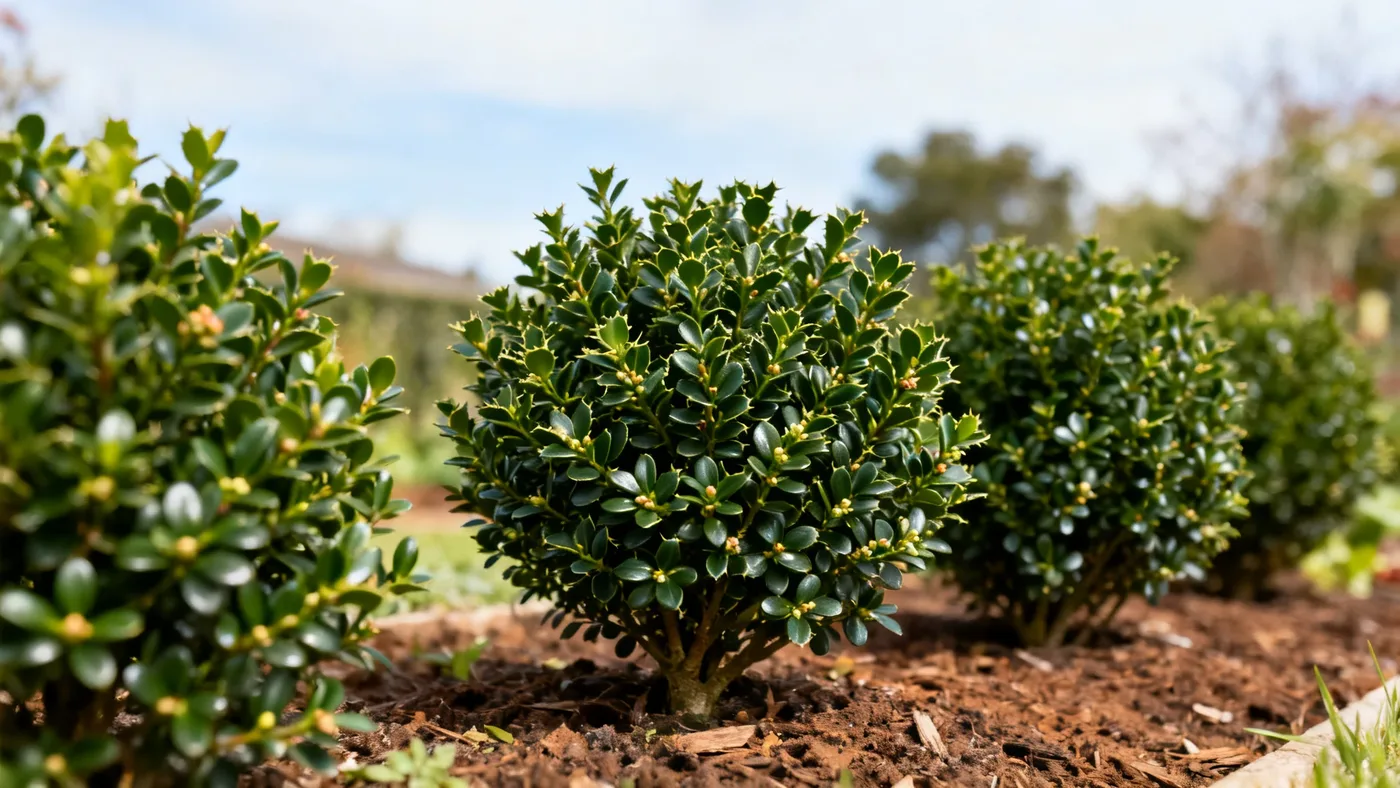
Compact Japanese Holly berries are mildly toxic if ingested. Ingestion typically causes nausea, vomiting, or stomach upset rather than severe poisoning. The small, dark-green, glossy leaves with finely toothed margins are not toxic and perfectly safe to touch or handle. This distinction is important because the foliage makes up the vast majority of what people and pets contact when around the plant.
What part of Compact Japanese Holly is poisonous?
Only the berries pose a toxicity risk. The foliage is completely safe. Since Compact Japanese Holly is valued primarily for its dense, fine-textured evergreen canopy (which resembles boxwood), the non-toxic leaves are what gardeners see and work with most of the time. The small black berries are inconspicuous and often sparse on 'Compacta' plants.
How toxic are the berries compared to other hollies?
Compact Japanese Holly berries are consistently mildly toxic within the Ilex genus, similar to other Japanese Holly cultivars and many broadleaf evergreen species. The risk is low enough that accidental ingestion is rarely an emergency. If you already grow other hollies or similar ornamentals, the toxicity profile is comparable and manageable with the same precautions.
Can you get poisoned by touching Compact Japanese Holly?
No. Simply handling the plant, touching the leaves, or working with branches poses no risk whatsoever. Toxicity only occurs if berries are actually ingested and swallowed. Washing your hands after gardening is always good practice, but skin contact with any part of this plant does not cause poisoning.
Is the sap toxic?
No. The foliage and sap present no hazard. You can safely prune and handle cuttings without gloves for safety reasons (though gloves protect your hands from the slightly rough-textured leaf margins). The plant is not a dermal irritant.
Berries and Fruiting
Do all Compact Japanese Holly plants produce berries?
Most Compact Japanese Holly plants are female selections capable of setting berries, but fruiting on 'Compacta' specifically is often sparse or inconspicuous compared to the species. Many home gardens see minimal berry production, especially in the first few years after planting. Male plants (if available) do not produce berries at all.
When do Compact Japanese Holly berries appear?
The plant flowers in late spring, typically May through June, with small white to greenish-white blooms that are easily overlooked. If berries develop after flowering, they typically become visible by late summer or early fall as tiny black fruits nestled in the foliage. The bloom window is a good time for planning if berry reduction is a priority.
What do Compact Japanese Holly berries look like?
The berries are small and black, often blending nearly invisibly into the dense dark-green foliage. Their small size and typically sparse production make them far less conspicuous than berries on other ornamental plants. Many gardeners never notice them without deliberately looking for them.
How many berries does a mature plant produce?
Fruiting varies considerably from plant to plant and year to year. Some mature plants produce hundreds of berries while others produce just a handful. Younger plants (under 5 years old) typically produce fewer berries than established plants.
Can you reduce berry production on Compact Japanese Holly?
Yes. Regular shearing or hand-pruning in late winter to early spring, before the bloom window, removes flower buds and prevents most berry development. Consistent pruning before May will eliminate most fruit production while maintaining the plant's ornamental shape. This is one of the most effective ways to reduce any toxicity risk in a family garden.
Toxicity in Dogs and Cats
Is Compact Japanese Holly toxic to dogs?
The berries are mildly toxic to dogs if eaten. A dog would need to ingest a significant quantity of berries to experience noticeable symptoms, and because berries are typically small and sparse on 'Compacta', accidental poisoning from casual contact with the shrub is uncommon. Dogs that actively chew or strip foliage from ornamental plants pose a higher risk to themselves than casual plant contact.
What happens if a dog eats Compact Japanese Holly berries?
The most likely outcomes are nausea, vomiting, or diarrhea, typically appearing within a few hours of ingestion. Symptoms generally resolve within 24 hours without any medical intervention. Severe poisoning is very rare, and the condition is self-limiting in most cases.
Is Compact Japanese Holly toxic to cats?
Yes, the berries would cause the same mild toxicity reaction in cats as in dogs if ingested. However, cats are generally far less likely to chew ornamental shrubs than dogs, so accidental ingestion is even less common in households where cats have access to the garden. Most cats ignore low-growing ornamental plants entirely.
How much Compact Japanese Holly is toxic to pets?
The toxic dose depends on the pet's body weight and individual sensitivity. Smaller pets (under 10 pounds) would be affected by fewer berries than larger dogs. Because the toxicity is mild, a small dog accidentally eating a few berries rarely requires emergency veterinary care, though calling your veterinarian to report the incident is always reasonable.
Should I remove Compact Japanese Holly if I have a dog?
Not necessarily. If your dog is not a shrub-chewer and the plant is in an area where the dog has limited unsupervised access, the risk is very low. Managing the plant through regular pruning to reduce berries and training your dog to avoid the shrub are practical alternatives. Many dog owners grow this plant safely without incident.
Toxicity in Children
Is Compact Japanese Holly poisonous to children?
The berries are mildly toxic if swallowed. A child would need to eat a substantial number of berries to experience noticeable symptoms. The small size, typically sparse production, and inconspicuous appearance of the berries make accidental ingestion far less likely than with more visually striking, abundantly fruiting plants.
What symptoms would a child have if they ate the berries?
Symptoms are typically mild and include nausea, vomiting, or stomach upset. Symptoms generally appear within a few hours of ingestion and resolve within 24 hours. Severe poisoning or lasting complications are not expected from accidental berry ingestion.
Is it safe to plant Compact Japanese Holly in a family garden?
Yes, many families grow this plant safely. Supervision and education are key. Teaching children not to eat plants and managing access or pruning to reduce berries are simple, effective precautions. The inconspicuous nature of the berries makes accidental ingestion far less likely than with heavily fruiting ornamentals.
What age of child is at highest risk?
Toddlers and young children ages 1 to 5, who explore the environment by putting objects in their mouths, are at the highest risk. Older children who understand not to eat plants pose minimal risk. Adult supervision and clear boundaries remain the most effective safeguards for very young children.
Can children touch the leaves safely?
Absolutely. The foliage is completely non-toxic and safe to touch. Children can play around the plant, touch the leaves, and handle branches without any risk. Only ingestion of berries presents a concern, not contact with the foliage.
Safe Handling and Prevention
How can I make my Compact Japanese Holly garden safer?
Prune regularly to reduce berry production, position the plant where pets and children have limited unsupervised access, and educate family members and visitors not to eat plants. If you have very young toddlers and want to eliminate risk entirely, a physical barrier around the plant or placement in a less-visited area of the garden is also an option. Regular late-winter pruning before flowering is the most practical preventive step.
Should I wear gloves when pruning Compact Japanese Holly?
Gloves are not required for safety, as the plant poses no toxic hazard. However, basic gardening gloves protect your hands from the finely toothed leaf margins, which can feel slightly rough. Standard gardening gloves are perfectly adequate and more about comfort than necessity.
Can I compost Compact Japanese Holly prunings?
Yes, leaves and stems are safe to compost. If you want to avoid any remote concern, remove berries before composting or discard them separately. Most home compost piles will break down berries without issue, but separation is a simple precaution if it gives you peace of mind.
What should I tell guests about the plant?
A simple note during garden tours that the plant's berries are mildly toxic if ingested is helpful, especially if you have young visiting children. Most adults understand not to eat ornamental plants, but the information is worth mentioning. This is standard practice for anyone growing potentially hazardous plants in a family or public space.
What to Do if Ingestion Occurs
What should I do if someone eats Compact Japanese Holly berries?
Stay calm and do not panic. Rinse the mouth with water and monitor for symptoms over the next few hours. Most cases are mild, and the person will recover without medical intervention. Having a plan in advance (knowing the Poison Control number, your pediatrician's contact information) helps you respond confidently if the situation occurs.
When should I call a doctor or veterinarian?
For children, contact Poison Control at 1-800-222-1222 (US) or your pediatrician if ingestion occurs, even if no symptoms appear immediately. For pets, contact your veterinarian if your dog or cat eats a large quantity of berries or shows signs of distress (vomiting, lethargy). Professional evaluation is recommended if symptoms last longer than a few hours or worsen.
What information should I have ready for medical professionals?
Note the approximate time of ingestion, the estimated number of berries eaten (if possible), the person or pet's weight, and any symptoms you have observed. This information helps medical professionals assess the risk and determine whether observation or treatment is needed. Photos of the plant can also be helpful in confirming the species.
Growing Compact Japanese Holly Safely
Where should I plant Compact Japanese Holly to minimize risk?
Choose a location where young children and pets have supervised or limited access. Along a property line, in a formal hedge away from main play areas, or as a foundation planting closer to the house are all practical placements. For detailed site selection and growing conditions, refer to our complete care guide.
Can I grow Compact Japanese Holly in a container?
Yes, container growing works well and may actually reduce risk in some settings. A containerized plant on a high shelf or table keeps it out of reach of toddlers and most pets. Container plants require regular watering since pots dry faster than garden soil, so plan for consistent moisture during the growing season.
Are there non-toxic holly alternatives?
Boxwood (Buxus spp.) is non-toxic and offers similar fine, dense foliage. However, boxwood is more susceptible to certain diseases, while Compact Japanese Holly offers better disease resistance. Many gardeners choose Compact Japanese Holly because the mild toxicity risk is manageable with basic precautions and offers superior plant performance.
How does pruning affect toxicity risk?
Pruning does not change the toxicity of individual berries, but it significantly reduces the total number of berries on the plant. Late-winter to early-spring pruning before the May-June bloom window is the most effective way to minimize berry production and thus reduce toxicity risk. For more on growth rate and pruning techniques, see our guide on size and growth.
Quick Reference Toxicity Guide
| Question | Answer |
|---|---|
| Are berries toxic? | Yes, mildly toxic if ingested |
| Are leaves toxic? | No |
| Typical symptoms of ingestion | Nausea, vomiting, stomach upset |
| Severity level | Mild; rarely severe poisoning |
| Berry appearance | Small, black, inconspicuous |
| Typical recovery time | 24 hours without medical intervention |
| Risk to dogs and cats | Low if sparse berries; moderate if abundant |
| Risk to young children | Low with supervision and pruning |
| Best prevention method | Regular late-winter pruning before flowering |
| Bloom and berry timing | Flowers May-June; berries appear late summer/fall |
| USDA hardiness zones | 6-8 |
| Safe to touch foliage | Yes, completely safe |