Compact Japanese Holly vs Boxwood: Which Should You Plant?
Boxwood has dominated formal hedges and foundations for generations, but Compact Japanese Holly is changing that conversation. Both evergreens offer fine foliage, slow growth, and the formality that gardeners want. The real question is not whether one is better, but which suits your garden's conditions and your maintenance plans.
Quick Comparison Table
| Attribute | Compact Japanese Holly | Boxwood |
|---|---|---|
| USDA Zones | 6–8 | Varies by species |
| Mature Height | 3–4 ft (to 5 ft unsheared) | Varies widely |
| Mature Width | 4–5 ft | Varies by cultivar |
| Growth Rate | Slow: 3–6 in per year | Slow to moderate |
| Foliage | Small, dark green, toothed margins | Fine, varied by species |
| Soil pH Preference | Acidic: 5.0–6.5 | Alkaline-tolerant |
| Disease Resistance | Resistant to boxwood blight | Susceptible to blight |
| Pruning Tolerance | Excellent; responds to renewal pruning | Good; formal shearing standard |
Foliage and Appearance
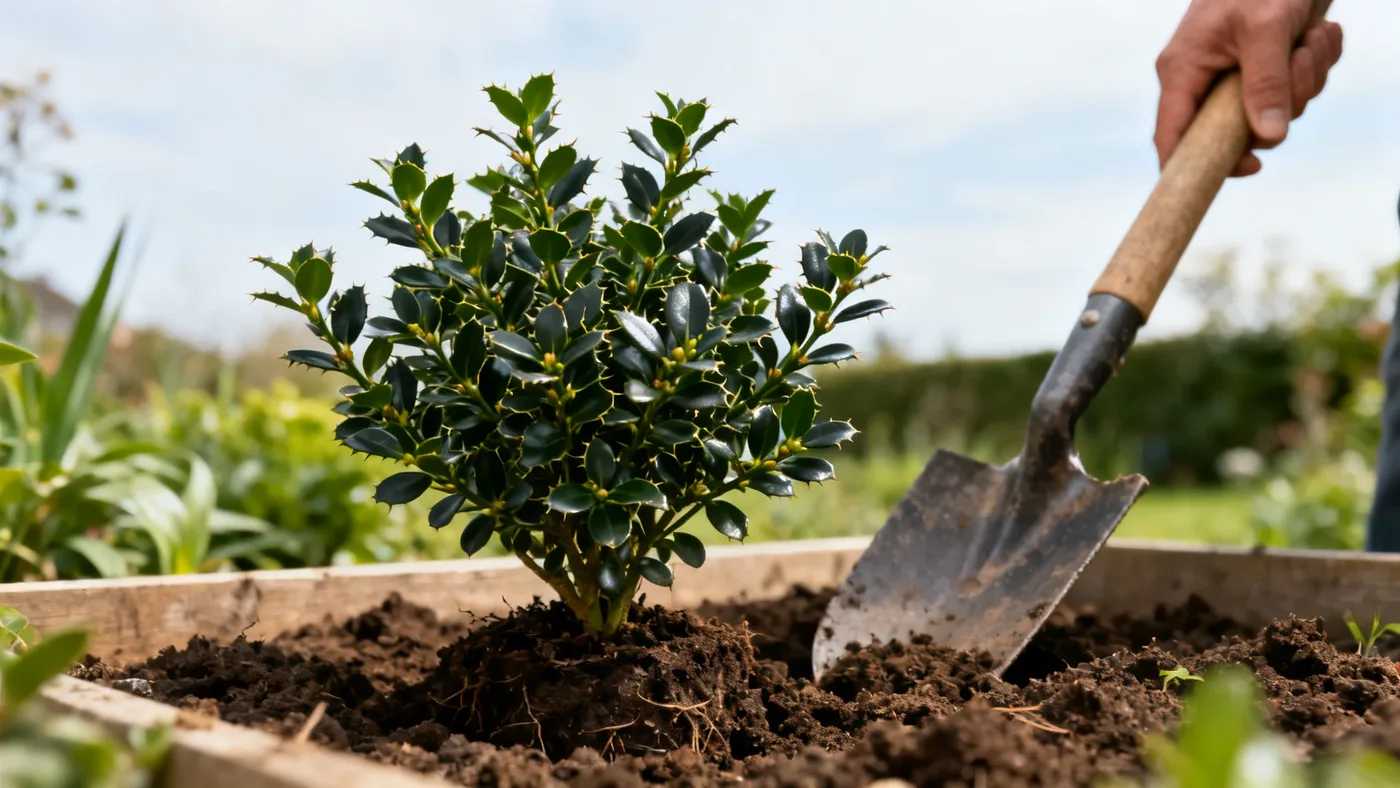
At first glance, Compact Japanese Holly and boxwood are nearly indistinguishable. Both offer small, dark green, densely packed leaves that hold their color year-round. The Compact Japanese Holly has oval leaves with finely toothed margins, under 1 inch long, creating a glossy, refined texture. Boxwood typically has smoother leaf edges, but unless you stand close, most people cannot tell them apart in a hedge.
Where they differ is in winter presentation. Compact Japanese Holly retains its dense, dark-green form through winter without significant change. In exposed, windy sites or particularly harsh cold, the foliage may bronze or yellow slightly, but it remains evergreen and functional. Boxwood, depending on the species and cultivar, can show similar resilience or can look tired or faded in extreme cold.
Climate and Hardiness
Compact Japanese Holly thrives in USDA zones 6–8, though some nurseries list 5b–8 with winter wind protection. This makes it reliable for most of the Upper South and Mid-Atlantic. Boxwood species vary considerably: some are hardy to zone 5, others only to zone 6 or 7. If you are in the colder end of zone 5, boxwood may have better options; if you are in zone 8 or moving south, check your specific boxwood cultivar, as heat tolerance differs.
For gardeners in zones 6–7, both are solid choices. The tiebreaker often comes down to other site conditions.
Soil Requirements and pH
This is where Compact Japanese Holly and boxwood diverge most clearly. Compact Japanese Holly prefers acidic, well-drained, humus-rich loam, with an optimal soil pH around 5.0–6.5. It tolerates clay as long as drainage is adequate, but it dislikes wet or soggy soils. Plant it in alkaline soil (above pH 7.0) and you risk chlorosis, the yellowing of leaves that signals nutrient stress.
Boxwood is traditionally more alkaline-tolerant. If your soil runs neutral to slightly alkaline, boxwood may be the safer choice. However, if your garden is naturally acidic or you have been building acid soil for acid-loving plants like azaleas, rhododendrons, or hydrangeas, Compact Japanese Holly fits seamlessly into that environment and often performs better.
Water and Drainage
Compact Japanese Holly requires moderate, consistent moisture. Water it regularly until established, then maintain moderate, consistent moisture year-round. It does not tolerate complete drying out. This is not a shrub for hot, sandy soils in full sun without supplemental watering. Once established, drought tolerance is moderate, meaning it can handle occasional dry spells but prefers reliable moisture.
Boxwood also prefers well-drained, consistent moisture. Both shrubs are poor choices for permanently wet sites. The key difference is that Compact Japanese Holly is more intolerant of extended drought once mature, so it rewards consistent care with better foliage quality.
Disease Resistance: A Decisive Factor
For the past two decades, boxwood blight has devastated boxwood plantings across North America. The fungal disease, caused by Calonectria pseudonaviculata, causes leaf spot, stem canker, and rapid defoliation. No boxwood species is immune, though some cultivars show better resistance than others.
Compact Japanese Holly is naturally resistant to boxwood blight. If disease pressure is high in your region, or if you have lost boxwood to blight in the past, this alone makes Compact Japanese Holly a practical alternative. You get the same formal appearance without the fungal threat. This is explicitly why the plant facts note Compact Japanese Holly as a "boxwood substitute with better disease resistance to boxwood blight."
Boxwood can face other stresses: spider mites, scale insects, and root rots in poorly drained soil. Compact Japanese Holly also hosts spider mites, scale insects, and leafminer, but these pests are typically less damaging. Phytophthora root rot can affect both in wet soil, so drainage is non-negotiable for either plant.
Growth Rate and Pruning
Compact Japanese Holly grows slowly, about 3–6 inches per year. This is an asset if you want a formal hedge that holds its shape between pruning sessions. It reaches a mature height of 3–4 feet and width of 4–5 feet over time, or up to 5 feet if left unsheared for many years.
Prune in late winter to early spring before new growth flushes. The plant tolerates a light second shearing in early summer. If your Compact Japanese Holly becomes leggy, it responds remarkably well to heavy renewal pruning, recovering with dense, healthy growth. This makes it forgiving for gardeners who miss a season or need to rehabilitate an old hedge.
Boxwood is equally formal and shear-friendly, with comparable slow growth. Both are excellent for topiary and tight geometric forms. For pure pruning tolerance and refinement, they are peers.
Landscape Uses and Spacing
Plant Compact Japanese Holly 3–4 feet apart for a continuous low hedge, or 4–5 feet apart for specimen or foundation use. It excels as an edging, border plant, mass planting, or specimen shrub. It is also suitable for containers, where its slow growth and compact form make it an elegant focal point for patios or formal entries. Keep in mind that containerized plants dry faster than in-ground beds, so watering consistency is even more critical.
Boxwood fills identical roles and uses the same spacing. Both pair beautifully with acid-loving companions like azaleas, rhododendrons, hydrangeas, hostas, and ferns.
Best For: Which Plant Fits Your Garden?
Choose Compact Japanese Holly if:
- Your soil is acidic or you grow other acid-loving plants.
- Boxwood blight is present in your region or history of loss concerns you.
- You want a low-maintenance evergreen that tolerates renewal pruning well.
- You prefer deer-resistant plants. Compact Japanese Holly has good to high deer resistance.
- You want reliable performance in zones 6–8 with minimal fussing.
- You plan to container-grow a formal specimen.
Choose Boxwood if:
- Your soil is neutral to alkaline and you want to avoid soil amendment.
- You are in a region where boxwood blight is not established or you have reliable disease-management protocols.
- You need a cultivar rated for zone 5 or you want proven old-garden cultivars.
- You prefer a plant with extensive cultivar selection and a long horticultural history.
- You want a slower-growing option in an extreme climate where boxwood is more reliably cold-hardy than Compact Japanese Holly.
The Verdict
Compact Japanese Holly is not a better plant than boxwood. It is a different plant suited to different conditions. In acidic soil with good drainage, in regions affected by boxwood blight, and in gardens with consistent moisture, Compact Japanese Holly often outperforms boxwood. In alkaline soil, in disease-free zones, or where you want the widest selection of cultivars, boxwood remains the standard.
The shift toward Compact Japanese Holly reflects a practical response to disease pressure, not a replacement of a classic. Both earn their place in a well-planned landscape. If you are uncertain about your soil pH, test it first. If disease history weighs on you, Compact Japanese Holly is the safer bet. Otherwise, choose based on your soil, your climate, and the cultivars available in your region.
For detailed care instructions on Compact Japanese Holly, including pruning schedules, fertilizing, and pest management, see our complete care guide.
Quick Reference: Side-by-Side Checklist
| Question | Compact Japanese Holly | Boxwood |
|---|---|---|
| Is your soil acidic (pH 5–6.5)? | ✓ Ideal | Tolerates, not preferred |
| Has boxwood blight been found nearby? | ✓ Resistant | Susceptible |
| Do you want minimal pruning? | ✓ Slow growth | ✓ Slow growth |
| Are you in zone 6 or 7? | ✓ Reliable | ✓ Reliable |
| Can you provide consistent moisture? | ✓ Required | Prefers consistent |
| Do you want a formal hedge? | ✓ Excellent | ✓ Excellent |
| Do you want container-friendly? | ✓ Yes | ✓ Yes |
| Are deer a problem? | ✓ Good to high resistance | Moderate resistance |