Is Compact Japanese Holly Truly Deer Resistant?
Deer can devastate a landscape in a single season, browsing through carefully chosen plantings and leaving bare stems behind. Many home gardeners ask whether Compact Japanese Holly offers real protection or merely hope. The answer is practical: yes, Compact Japanese Holly has good to high deer resistance, but it works best when you understand what that actually means and how to use it strategically in your garden.
General Deer Resistance
Is Compact Japanese Holly truly deer resistant?
Yes, Compact Japanese Holly has good to high deer resistance. Hollies are generally low on deer browse preference lists, meaning deer prefer to eat other plants when alternatives exist. Resistance is not the same as deer-proof; a hungry deer in an area with limited food sources may still browse any plant, so think of it as one tool rather than a guarantee.
How does Compact Japanese Holly compare to other deer-resistant shrubs?
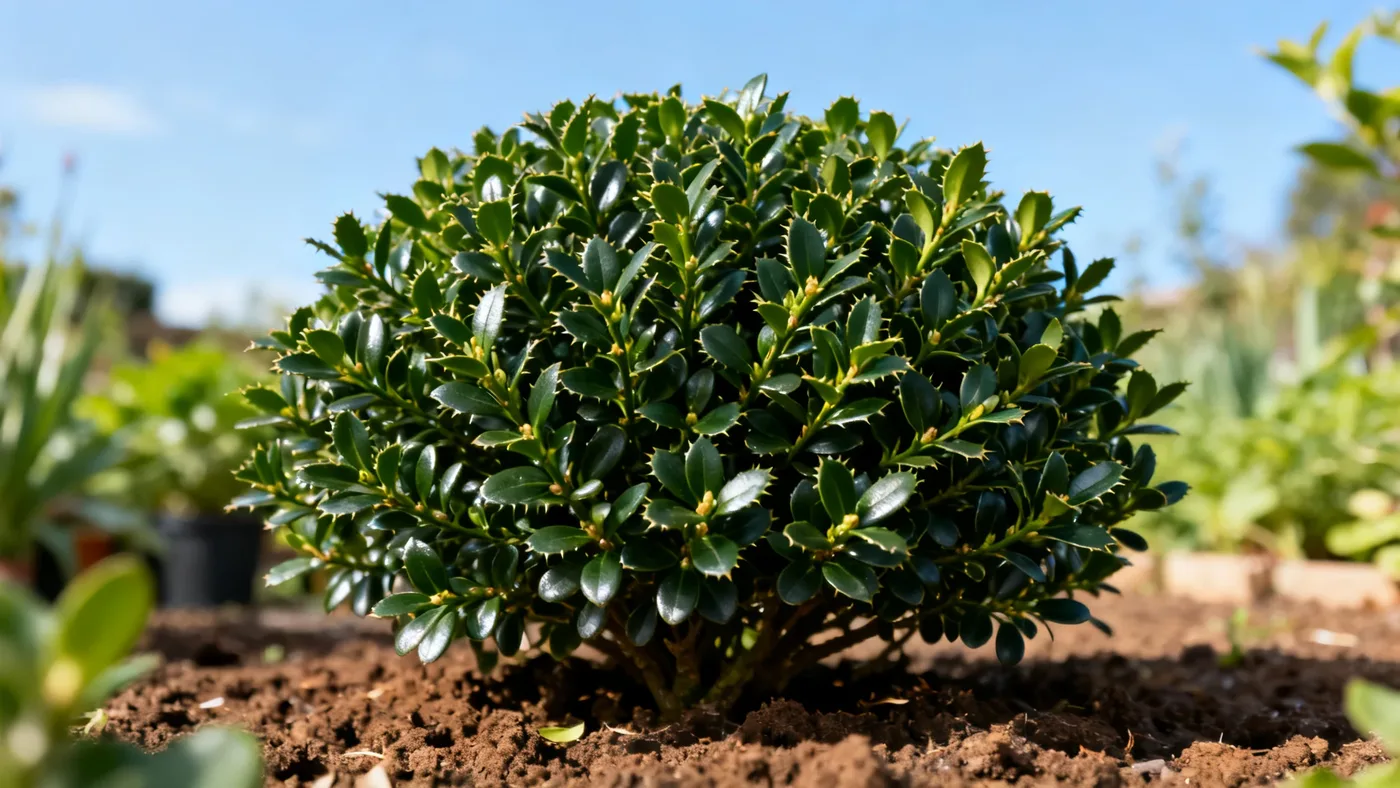
Compact Japanese Holly ranks among the better deer-resistant options for small-scale plantings. Its dense foliage, small leaves (under 1 in long), and the holly family's naturally low palatability combine to make it a smart choice where deer pressure is moderate to high. Many landscapers recommend it as a boxwood substitute precisely because it offers superior disease resistance alongside good browsing protection.
Why are hollies less attractive to deer than other evergreens?
Deer tend to avoid plants with waxy, small leaves and tight branching structures that are difficult to eat. Compact Japanese Holly has finely toothed, glossy leaves and dense growth habit, plus the holly family's characteristic compounds that make browsing less rewarding. The effort required to extract nutrition simply isn't worth it when softer plants are nearby.
Can I rely on Compact Japanese Holly alone to keep deer out of my garden?
No single plant works as a complete deer barrier. Compact Japanese Holly works best as part of a layered landscape with other deer-resistant species like azaleas, rhododendrons, and hostas. If your area has extreme deer pressure, pair your plantings with fencing (6-8 ft is the standard) or accept that you'll need supplemental deer management strategies.
Rabbits and Other Animals
Is Compact Japanese Holly rabbit resistant?
Yes, Compact Japanese Holly is generally resistant to rabbit damage. The small, waxy leaves and dense twigs are not preferred rabbit browse, though tender new growth in spring is always somewhat more vulnerable during active growth flushes. Once the plant hardens off, rabbits will move to easier meals.
What other wildlife might browse Compact Japanese Holly?
Squirrels occasionally strip bark in winter if food is scarce. Goats will eat any plant if they gain access, and some wildlife guidebooks note light browsing by moose or other large herbivores in northern regions. For most home gardens in zones 6-8, deer and rabbits are the primary wildlife concern, and Compact Japanese Holly resists both.
Are the berries a problem for wildlife?
Compact Japanese Holly berries are mildly toxic if ingested by pets or people, typically causing nausea, vomiting, or stomach upset rather than severe poisoning. Most birds and wildlife avoid the plant's bitter berries unless food is extremely scarce, so the toxicity is a safety feature rather than a liability.
Planting Strategy for Deer Protection
Where should I plant Compact Japanese Holly to maximize its deer resistance benefits?
Plant Compact Japanese Holly where it receives full sun to light shade; dense foliage in these conditions strengthens resistance. Position it along property edges, as a foundation border, or massed as a hedge at the landscape perimeter. This creates both a visual and physical barrier that discourages deer from entering deeper into the garden.
Can I use Compact Japanese Holly in a formal deer-resistant hedge?
Yes, Compact Japanese Holly is an excellent hedge choice for wildlife-resistant landscapes. It reaches a mature height of 3-4 ft (occasionally to 5 ft if unsheared) and width of 4-5 ft, making it perfect for low foundation plantings or property borders. Space plants 3-4 ft apart for a continuous, dense hedge that tolerates regular shearing in late winter to early spring.
Should I pair Compact Japanese Holly with other deer-resistant plants?
Absolutely. Combine Compact Japanese Holly with azaleas, rhododendrons, ferns, and hostas to create a layered, diverse landscape that is naturally more deer-resistant than any single species. A mixed planting offers more visual interest, extends seasonal color, and provides redundancy if one plant is stressed or browsed.
Does fence height matter if I'm planting deer-resistant shrubs?
Fencing remains the most reliable deer control method and should be 6-8 ft tall for adult deer. Deer-resistant plants like Compact Japanese Holly reduce browsing pressure but should not be your only strategy if local deer are a severe problem. The combination of fencing and deer-resistant plantings offers maximum protection.
Compact Japanese Holly as a Boxwood Alternative
Is Compact Japanese Holly a good boxwood replacement for deer-resistant gardens?
Yes, Compact Japanese Holly is often recommended as a boxwood substitute. Both plants have small leaves, dense form, and low deer palatability. Compact Japanese Holly actually offers an advantage: superior disease resistance and good to high deer resistance, making it a practical upgrade where boxwood has struggled.
What companion plants pair well with Compact Japanese Holly in a deer-resistant scheme?
Azaleas, rhododendrons, ferns, and hostas are ideal companions. These plants prefer similar soil conditions (acidic, humus-rich loam) and tolerate the light to part shade that Compact Japanese Holly creates when massed. Together, they form a cohesive, self-supporting landscape that deer find unappealing.
How do I know if my soil is suitable for Compact Japanese Holly and its deer-resistant companion plants?
These plants thrive in acidic soil (roughly 5.0-6.5 pH) with well-drained, humus-rich loam. If your soil is alkaline or clay-heavy, amend it before planting or choose a different location. Poor drainage invites root rot and weakens deer resistance by stressing the plant; this is the single most common failure point.
Environmental Factors and Deer Behavior
Does regional deer population affect how well Compact Japanese Holly protects my garden?
Yes, regional deer density significantly impacts browsing pressure. In areas with high deer populations and limited natural food, even deer-resistant plants may be browsed. In regions with moderate deer pressure, Compact Japanese Holly's resistance translates to real, visible protection.
When are young Compact Japanese Holly plants most vulnerable to deer?
Newly planted, tender growth is most vulnerable. Protect young plantings (under 2 years old) with fencing or deer netting during spring growth flushes if your area has known deer pressure. Once established with hardened foliage, the plant's deer resistance kicks in significantly.
Does winter present different deer browsing pressure than summer?
Yes, winter browsing is typically more severe when natural food sources are scarce and alternative plants are dormant. A dense Compact Japanese Holly hedge provides some relief, but pairing it with winter-hardy companion plantings and maintaining vigorous growth ensures your best defense against seasonal pressure.
How does drought stress affect deer resistance?
Stressed plants (from drought, poor drainage, or soil pH extremes) are more vulnerable to browsing because they cannot quickly regrow damaged foliage. Keep Compact Japanese Holly healthy by providing regular water until established, then maintaining consistent moisture in zones 6-8. Well-nourished plants recover from light browsing faster than weakened ones.
Maintenance and Long-Term Care
Will shearing Compact Japanese Holly increase or decrease its deer resistance?
Regular pruning actually strengthens deer resistance by promoting dense, tight foliage that is less accessible to browsing. Shear or hand-prune in late winter to early spring before new growth flushes; you can tolerate a light second shearing in early summer if needed. Dense plants present a less inviting target than open, leggy ones.
What should I do if deer browse my Compact Japanese Holly despite its resistance?
Light browsing signals very high local deer pressure. Add temporary fencing around affected shrubs, increase companion plantings, or apply deer repellent sprays if the problem persists. The plant will recover quickly if browsing is light to moderate; heavy damage warrants stronger protective measures like a permanent deer fence.
How long does it take for Compact Japanese Holly to reach full protective size?
Compact Japanese Holly grows slowly, roughly 3-6 in per year. It takes 5-10 years to reach mature size (3-4 ft tall and 4-5 ft wide), so plan ahead when establishing a hedge. Younger plants benefit from temporary fencing support in high-deer-pressure areas until they reach browsing-resistant maturity.
Can I boost deer resistance through fertilizing or soil amendments?
No, deer resistance is an inherent plant trait and cannot be strengthened through nutrition. However, keeping Compact Japanese Holly healthy with light annual spring feeding (balanced or acid-forming fertilizer) and consistent moisture ensures the plant can quickly regrow if light browsing occurs. Strong plants recover; weak ones do not.
Quick Reference: Compact Japanese Holly Deer Resistance at a Glance
| Factor | Details |
|---|---|
| Deer Resistance Rating | Good to high; hollies are generally low on deer browse preference lists |
| Rabbit Resistance | Yes; small leaves and dense growth are unappealing to rabbits |
| Best Planting Location | Full sun to light shade; property edges or foundation borders |
| Mature Size | 3-4 ft tall (up to 5 ft if unsheared) × 4-5 ft wide |
| Spacing for Hedges | 3-4 ft apart for continuous coverage |
| Growth Rate | Slow, roughly 3-6 in per year |
| Time to Maturity | 5-10 years to reach full protective size |
| Pruning (for density) | Late winter to early spring, before May-June bloom |
| Ideal Soil | Acidic, well-drained, humus-rich loam (pH 5.0-6.5) |
| USDA Zones | 6-8 |
| Best Companion Plants | Azaleas, rhododendrons, ferns, hostas (all deer-resistant, similar soil needs) |
| Deer-Proof Guarantee | None; use with fencing (6-8 ft) in high-pressure areas |
For comprehensive care instructions beyond deer resistance, see the Compact Japanese Holly care guide.