Is Bennett's Compacta the Same as Compact Japanese Holly?
The label on the pot does not change what is in it. If you are standing in a nursery aisle with a tag reading Bennett's Compacta in one hand and a phone full of search results in the other, you are almost certainly looking at the holly you came for: Ilex crenata 'Compacta'. It deserves a straight answer.
This guide covers everything you need to know about the Bennett's Compacta name, from how it relates to the standard plant and why growers rebrand it, to deer resistance, growth habit and how to pick a good one off the bench. A fancier tag gets you nothing in the ground. A healthy plant, bought at a size that suits your project, gets you a clean, dark green shape that still looks right in year five.
A Trade Name Does Not Make a Different Compact Japanese Holly
The first principle is the one everything else rests on. Bennett's Compacta and 'Compacta' are one plant, and here is how the paperwork backs that up.
One Plant, Two Names
'Bennett's Compact' is a synonym of Ilex crenata 'Compacta'. A synonym is the same plant under another name. So the two are not rivals, cousins, or a plant and its upgraded version. The trade has simply drifted into saying "Bennett's Compacta," which blends the two names into one label.
What we tell customers is to read the Bennett's part like a surname on a tag. It hints at which line of stock a grower is working from. It does not tell you the plant is a new species, a hybrid, or a cultivar with its own rules for sun, soil and size.
The Denser Habit Claim
Some sellers pitch Bennett's Compacta as a slightly denser, tighter version of the plain one. Here is how we read that claim.
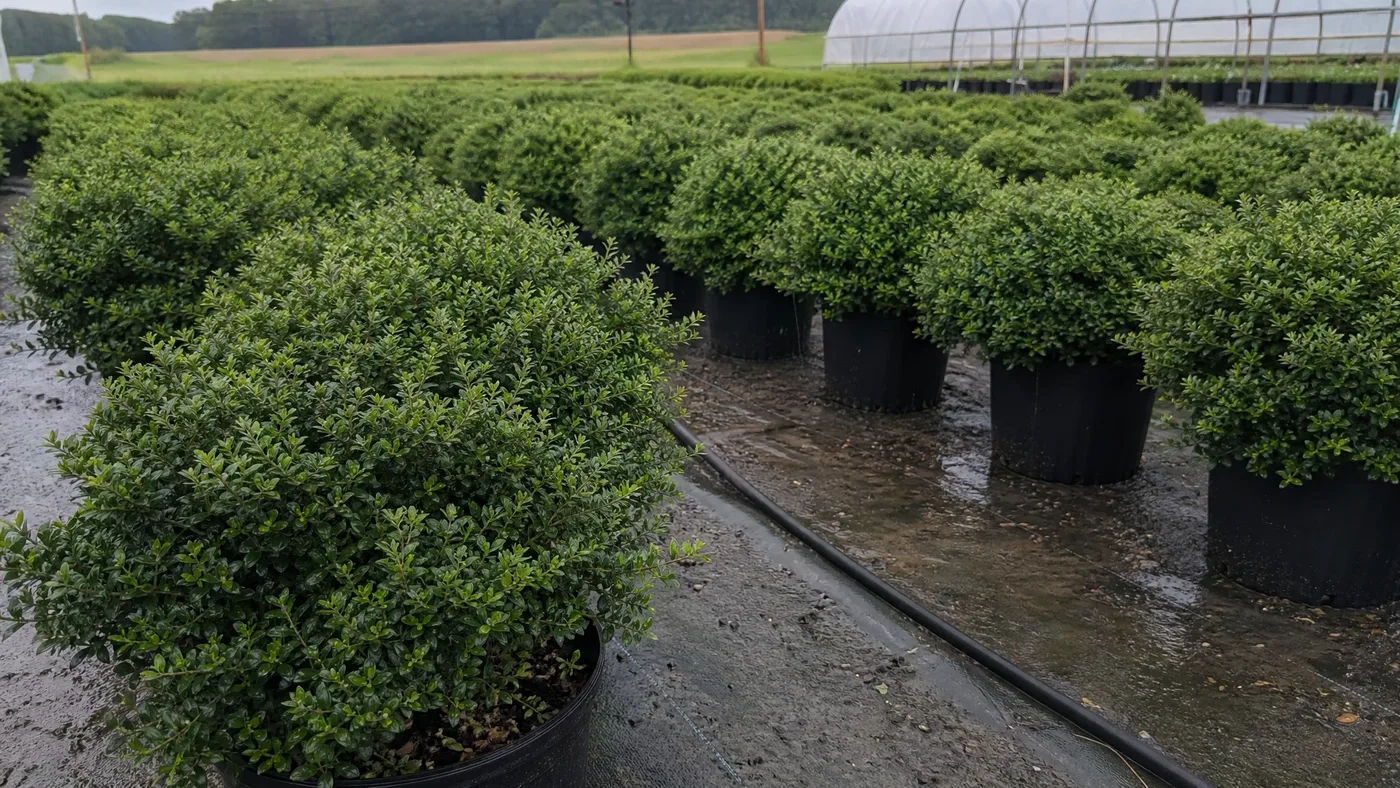
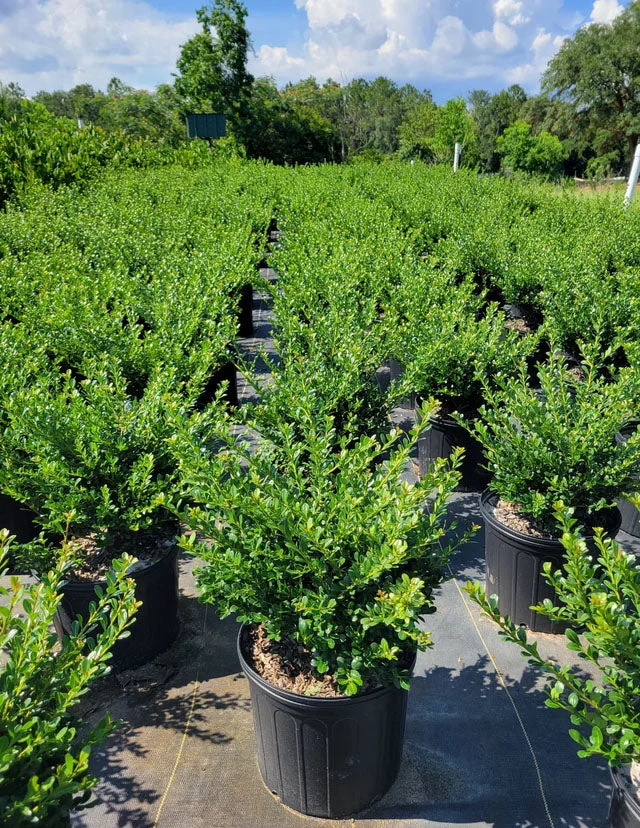
A grower's batch can honestly look tighter than the plant on the next bench. Different propagation timing, pruning and feeding histories show up in a pot. Several different plants are marketed under the name 'Compacta', so they are not all the same clone and can differ genetically. Once a plant has spent a couple of seasons in your sun and soil and taken a shearing, the pot history fades and the plant settles into the same low, compact, rounded mound that 'Compacta' is known for. In our rows, two blocks of this same holly can look like different plants until both have been sheared once.
Compact Japanese Holly Gets Sold Under Many Labels
The second principle is that the name on the tag tells you about the seller's marketing more than about the plant. Knowing why helps you shop without second-guessing every label.
Why Growers Add a Name
A plain cultivar name is anyone's to use. A tag with a recognizable name in front of it looks like a product, and products get shelf space, a spot in a catalog, and a slightly higher price. Nurseries also rename to separate their own stock from a neighbor's, or because an older name ('Compacta') sounds generic next to a newer one. None of this requires a different plant. It only requires a tag printer.
Labels You Will See at the Garden Center
This table sorts the names you are likely to meet and what each one usually means for what you are buying.
| Label on the tag | What it usually is | What to do |
|---|---|---|
| Compact Japanese holly | The common name for Ilex crenata 'Compacta' | Check the Latin name underneath |
| Compacta holly | A shortened form of the cultivar name | Fine as is |
| Bennett's Compact | Another name for the same plant | Treat it as 'Compacta' |
| Bennett's Compacta | A trade blend of the two names above | Same plant, so do not pay a premium |
| Helleri | A different cultivar | Not interchangeable, see our Compacta vs Helleri comparison |
The one row that deserves caution is the last. A tag that drops "Compacta" entirely and gives you a vaguer "dwarf holly" is where real mix-ups start.
The Latin Name Settles the Argument
The third principle is to let the botanical name do the work. It is the only part of a tag that every grower is expected to get right, so it is the part you check first.
Read the Tag in Order
Look for Ilex crenata first, then 'Compacta' or 'Bennett's Compact' in single quotes. If both are there, the label matches the plant that nearly every landscape reference describes as a low, globose, spreading evergreen with small, glossy, dark green leaves around three quarters of an inch long. The marketing name in front is decoration. For the full botanical picture, our botanical facts guide covers the species and cultivar side by side.
When the Latin Name Is Not Quite Enough
There are several plants marketed under the 'Compacta' name. The best-known one came from Tingle Nursery and is male. That cultivar bears no fruit, so if the plant you are holding has a heavy set of berries, it is not that clone, whatever the tag says.
This is the one practical reason to ask questions at the counter. Ask who grew it, and whether it is the male, fruitless selection. A grower who knows the answer is a grower worth buying from. One who does not know is giving you a hint about everything else on the lot.
Compact Japanese Holly Gets No Deer Bonus From a Fancy Tag
The fourth principle covers the question that brings many people here. Deer resistance follows the plant, and a rebranded tag does not add any.
What the Rating Actually Says
'Compacta' is mildly resistant to damage by deer. Because Bennett's Compact is the same plant under another name, that rating is also the answer to the search that goes "do deer eat Bennett's Compacta holly." Sometimes, yes. "Mildly" is the honest word. It means deer usually pick other things first, not that they never touch it.
Plan for Deer Anyway
If deer walk through your yard every night, protect new plants for their first seasons and watch for browsing on the outside of the mound, where tender growth lives. A grower who promises a Bennett's selection is deer-proof is selling the tag, not the plant. Our guide on whether compact Japanese holly is truly deer resistant goes through how to read your own deer pressure before you commit to a long hedge.
What It Means for a Screen
A screen is the worst place to learn that a rating was optimistic, because the damage shows along the whole line at eye level. Hungry deer will nip the outer foliage of a mildly resistant evergreen, and a hedge that gets sheared already has the tight, repeated growth that hides the nibbling. Treat the first winter after planting as the test. If browsing stays light, you have your answer. If it does not, fence or cover the young plants until they fill in.
Expect the Same Growth From Any Compact Japanese Holly
The fifth principle is that habit and growth rate are clone traits. Several different plants are marketed under the name 'Compacta', so they are not all the same clone and can differ genetically.
Size and Pace
'Compacta' grows 6 to 8 feet tall and 6 to 10 feet wide with a medium growth rate. That is wider than tall, which is the spreading, globose habit in numbers. The species runs 5 to 10 feet tall and 5 to 8 feet wide, so the cultivar is the broader, rounder one. If an older tag promised a much smaller mature size, trust these figures. Our guide on how big and fast-growing compact Japanese holly gets covers the pace year by year.
Site Needs Do Not Change With the Label
Whatever the tag says, this holly wants full sun, meaning six or more hours of direct light, and tolerates some part shade. It is hardy in zones 6a through 8b and does not like alkaline soil or drought. Heat and humidity can also be a concern at the warm end of its range. A plant bought under a premium name sulks in a dry, limey bed exactly as the cheaper one does.
What Year Five Looks Like
By year five the label has stopped mattering. You have a rounded, dark green mass that either has room or does not, and nothing printed on a pot affects that. Because 'Compacta' tolerates pruning, it works as a foundation plant, a hedge, a border or a topiary subject, and shearing is how you hold it at the small end of those mature sizes.
In late spring the plant carries small, fragrant white flowers that attract bees. Since the best-known clone is male, you will not get berries to clean up. Leave it unpruned in a tight spot, though, and it will push past the space you gave it.
Buy Compact Japanese Holly on Size and Health, Not Name
The sixth principle is where your money should go. Once you accept the name is cosmetic, the real differences between two plants on the bench come down to size and condition.
Start With Size
Size is the one variable you control at the register. A bigger pot holds a more developed root system and a fuller shape, and for a screen or a hedge that shortens the wait. Our container size buying guide walks through the trade-offs. We grow our plants to a stated container size and label them with the botanical name, so what you read on the tag matches what is in the pot.
When two benches carry the same Latin name and one costs more because of a Bennett's label, the sensible move is to price the pots by size. Often the plain tag buys you a pot one size up for the same money, and that extra size is a head start you can see and measure.
Bench Checklist
Run through this list before you pay. It takes two minutes and tells you more than any tag.
- The foliage is a rich, glossy dark green all the way through, with no yellow patches or bare, brittle branches in the interior.
- The root ball holds together when the pot is slid off, with pale, fibrous roots rather than a tight mat circling the edge.
- The soil is evenly moist, not bone dry and not soggy, since this holly dislikes drought and wet feet alike.
- The branching is even around the whole plant, with no lopsided side that will need years to catch up.
- The Latin name appears on the tag and matches Ilex crenata 'Compacta' or 'Bennett's Compact'.
Check Your Own Bed Before You Buy
The best plant on the bench still fails in the wrong ground. This holly is intolerant of alkaline soil, and spider mites and nematodes are occasional pests, which stress shows up first on a plant already struggling. Test your soil pH before you carry anything home, and if it reads alkaline, ask your local extension service how to fix the bed or choose another plant.
Compact Japanese Holly by Any Name Grows the Same
Bennett's Compacta, Bennett's Compact and 'Compacta' point at one holly, and it grows the way the extension sources say it does. Several different plants are marketed under the name 'Compacta', so they are not all the same clone and can differ genetically. Use the Latin name to confirm identity, ask about the male fruitless selection if berries matter to you, and judge every plant by its roots and foliage.
Compact Japanese Holly
Nursery-grown Compact Japanese Holly in sizes from 1 Gallon Shrub, shipped to your door.
From $80.55
Shop Now →Stop paying extra for a name and spend it on a bigger pot. Before a plant leaves us, we match the Latin name on its tag to the plant in the pot and look for firm, pale roots, because we grow and sell top-quality shrubs on our own farms and a label should never be a guess.