What Is Compact Japanese Holly? Botanical Facts
"My tag says Compacta holly, the pot says Japanese holly, and the receipt says Ilex crenata. Which one am I actually planting?" A customer asked us nearly that, and the answer is that all three point at the same shrub. Only one of them is precise enough to trust when you order, label or look something up.
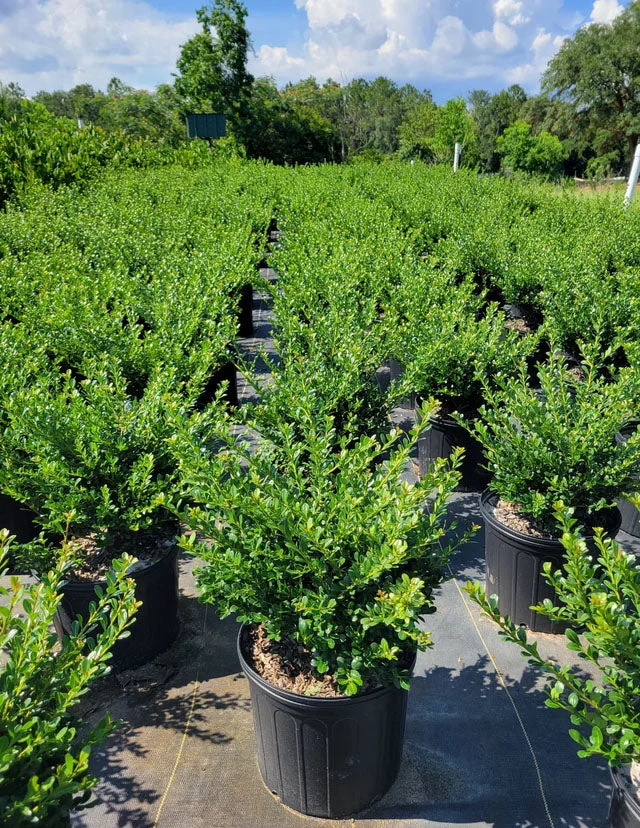
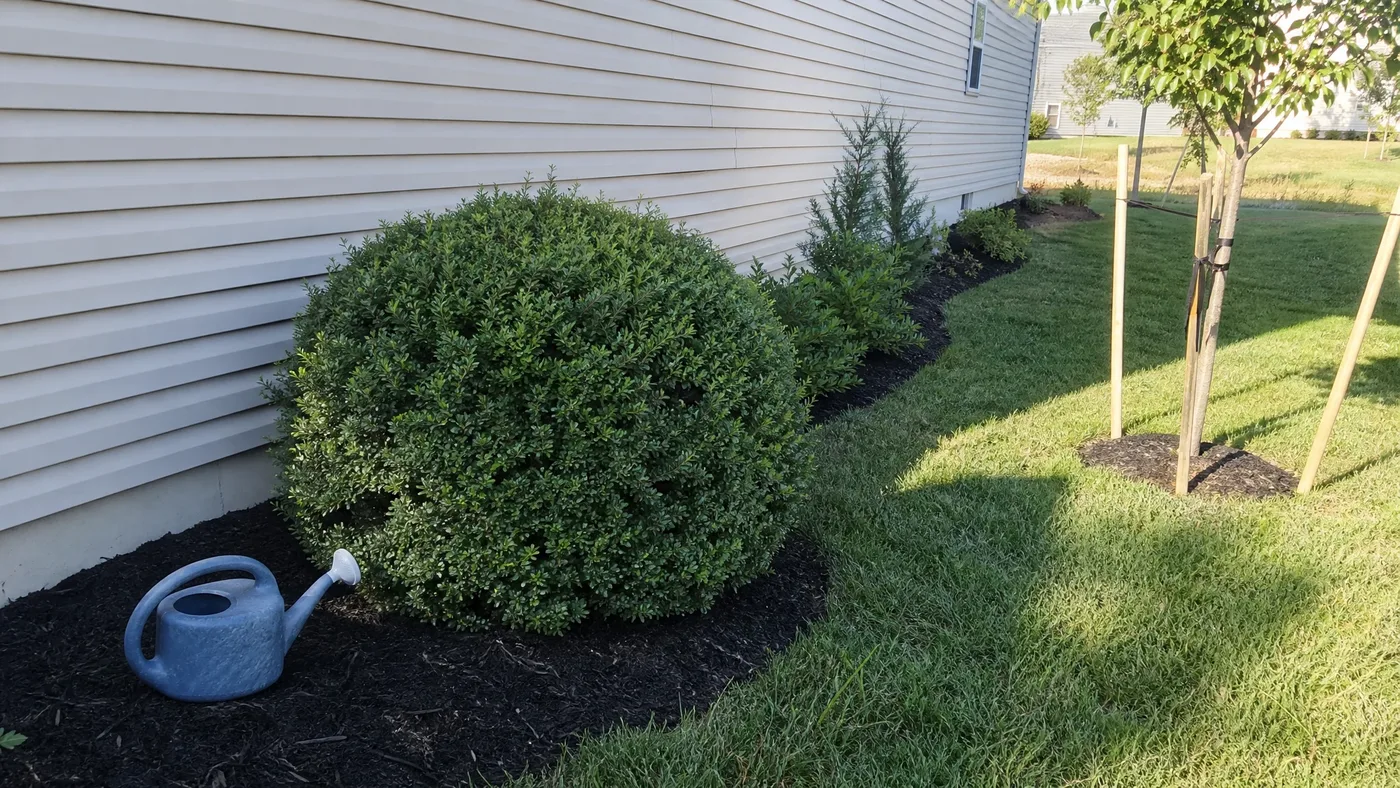
The shrub is Ilex crenata 'Compacta', sold as Compact Japanese Holly. It is an evergreen with small glossy leaves that people often mistake for boxwood, and a lot of what gets said about it is only half right.
This article talks about names, classification, native range and the history of the Compacta selection, and answers the questions customers ask us most. Read on to learn which labels you can rely on, where the species comes from, which popular claims fail, and how to use the facts when you buy.
Three Names on One Compact Japanese Holly Tag
Most tags carry a common name, a cultivar name or both, and nurseries mix them freely. Here is how the usual labels compare and how far each one can be trusted.
| Label | What it points to | How far to trust it |
|---|---|---|
| Japanese holly | The whole species, Ilex crenata | Too broad. It covers many different shrubs. |
| Compact Japanese Holly | Common name for the Compacta cultivar | Fine in conversation, loose at the checkout. |
| Compacta holly | Same plant, shorter form | Same as above. |
| Ilex crenata 'Compacta' | Species plus cultivar | The one to copy into a search box or an order. |
Common Names Are Loose by Design
Common names grow up around a plant without any rulebook, and the same words get stretched over several shrubs.
Compact Japanese Holly and Japanese Holly are alternate names for this shrub. Neither tells you which cultivar is in the pot, and "Japanese holly" on its own tells you almost nothing about size.
Nursery Variants Need a Second Look
The label that surprises people most is 'Compacta' itself. Several plants are marketed under the Compacta name, and the best-known came from Tingle Nursery and is male. So two nurseries can both sell "Compacta" and ship slightly different shrubs.
Helleri is a separate cultivar altogether, so a tag that says Helleri is not a spelling variant of Compacta. Our verdict: trust the Latin binomial and the quoted cultivar, and treat everything else as a nickname.
What the Latin Ilex crenata Really Tells You
A scientific name is a short address. Each part narrows the search, and reading them in order explains why the Latin name beats any common one.
Reading the Three Parts
Here is what each piece of the name carries, from the widest group down to the single selected plant.
Ilex is the genus, the hollies. Crenata is the species epithet and points to the scalloped, crenate edge of the leaf. The Compacta leaf has crenate-serrulate teeth. The family is Aquifoliaceae, the holly family.
'Compacta' is the cultivar name. The single quotes mean it was selected and named, not a separate species, and it is not italicized. That is why we never talk about "varieties of" Compacta. It is one cultivar of one species.
Why Latin Is the Safer Lookup
The practical case for the Latin name is that it keeps species facts and cultivar facts from bleeding into each other.
Search "Japanese holly" and you get the species, with every size and habit it includes. The Compacta cultivar page gives 6–8 feet tall and 6–10 feet wide.
Leaf size is cultivar specific too. The Compacta leaf is about 3/4 inch long.
Hardiness shifts too. NC State lists the species in zones 5a through 8b, while the cultivar page narrows that to 6a through 8b. Advice written for the species can be wrong for this cultivar, and only the full name keeps the two apart.
Is Compact Japanese Holly Actually a Holly?
The boxwood look is the reason this question comes up. Small, dark, rounded leaves on a clipped mound make most people think of Buxus, so it is fair to ask whether the holly label is just a trade habit.
The Evidence for Holly
The evidence is on the page, and it points one way.
It is a real holly. Compacta belongs to the holly family, Aquifoliaceae, and the genus is Ilex. The flowers are small, white and four-parted. The fruit is small and black, not the red berries of the Christmas holly.
The leaf gives a quick check. Compacta leaves are alternate along the stem. Boxwood leaves sit opposite each other, so a close look at one twig settles it.
Where the Boxwood Comparison Fails
Resemblance is not relationship. The teeth are small and blunt, nothing like the spiny leaves of the holly on a greeting card.
Our boxwood comparison covers how the two behave side by side in a hedge.
Flowers and Fruit You Should Expect
One of the most common questions we get is whether it will bear berries. The record is mixed. Compacta is known for small black fruit, yet the best-known version is male, and males do not set fruit.
Blooming runs May to June on the species, and the cultivar flowers are fragrant. Do not buy it for berries, and do not expect much show from the flowers either.
The Native Range in Japan, Korea and China
Japanese holly is a species from East Asia, but how precisely the sources describe its range varies, and that is worth stating plainly.
What the Sources Say
Two sources give two levels of detail, and neither is a survey of wild populations.
The species is native to Japan and Korea. Its range runs from East Nepal to Temperate East Asia, Japan and Korea. That is a wide arc, and it suggests a plant adapted to temperate country rather than a narrow island endemic.
Where the Record Is Thin
China appears in many plant references, but the sources we work from do not name it, so we will not state it as fact here. If the exact wild range matters to you, check a regional flora or your local extension service. The sources also say little about the wild habitat itself.
What they do give is a growing profile. The species prefers light, moist, slightly acid soils and takes sun to part shade. The Compacta page flags the cultivar as intolerant of alkaline soil, so a limed or chalky bed is a poor match for a plant from that background.
What the Range Means for Climate
Origin does not guarantee tolerance of every climate. The species is hardy to zone (5) 6, and the cultivar is listed for 6a through 8b. Heat and humidity are a concern at the warm end, so a plant from temperate country is not automatically happy in a humid Gulf summer.
Our soil and drainage guide has the practical side of those soil preferences.
How the Compact Japanese Holly Selection Came to Be Sold
The history of a cultivar is usually thinner than the stories told about it. Here is what can be documented and what is only lore.
What Is Documented
Very little, honestly, and it fits in a few sentences.
The sources describe Compacta as a low, compact, globose and spreading form of the species, with rich dark green foliage. They say several plants are sold under the name, and that the best-known was introduced by Tingle Nursery and is male. That is the whole documented trail in our sources. It gives us no breeder, no year and no wild-collected origin, so we do not offer one.
What Is Nursery Lore
You will hear tidy origin stories, such as a single seedling found in a row or a plant brought over from Japan. We cannot verify any of them from the sources, so we treat them as lore.
What we can explain is how selections generally work. A grower spots a seedling that is denser and lower than its siblings and roots cuttings from it. Cuttings are clones, so every plant carries the same habit as the parent.
Why Several Plants Share One Name
The catch is that more than one plant is marketed as Compacta. We cannot say how that happened, but it fits a name applied loosely to compact selections over time.
The result is that two Compacta hollies bought from different sources may not match in habit. Buy from a grower who can tell you what the plants were propagated from, and compare plants in person when you can.
Do the Popular Claims About Compact Japanese Holly Hold Up?
Claims travel faster than facts, and plant tags repeat them. We tested the ones we hear most against what the cultivar actually does.
The Three-Foot Claim
"Never grows over three feet" is the claim we push back on hardest. NC State's cultivar page gives 6–8 feet tall and 6–10 feet wide, and another NC State entry says about 6 feet high and wide.
Growth is listed as medium for the cultivar, while the species is called slow-growing. Slow is relative, and shearing is what keeps it small.
We often see customers plant it three feet from a window expecting a ball that stays put. Plan on the mature size, not the nursery pot, and read our size and growth guide before you set spacing.
The Maintenance-Free Claim
It is low-fuss, not no-fuss. Spider mites and nematodes are occasional pests, and holly leaf blight can trouble the species. Alkaline soil is a real problem, and the shape needs trimming if you want a tight mound.
The Deer-Proof Claim
Compacta is only mildly resistant to damage by deer. Mild resistance means deer may leave it alone when other food is around, and nothing more. Our deer resistance guide goes into what to expect.
Scoring Four Claims Against the Record
This table sets each claim beside what the record says, with a one-word ruling.
| Claim | What the record says | Verdict |
|---|---|---|
| Stays under 3 feet | 6–8 feet tall, 6–10 feet wide | False |
| Maintenance-free | Occasional mites, nematodes and leaf blight, plus shearing | Overstated |
| Deer proof | Mildly resistant to deer damage | Overstated |
| Evergreen with a neat shape | Evergreen, low, compact and globose | True |
What the Record Means for Compact Japanese Holly in Your Yard
With the facts sorted, the practical choices get simpler. Here is how we would use them when buying, labeling and planting.
Buying and Labeling
Ask for the full botanical name with the cultivar in quotes, Ilex crenata 'Compacta', and keep the tag. If a seller offers only "Japanese holly," you could be getting any of several selections.
A written cultivar name also lets you look up the right size and zone later, and it keeps species advice from steering you wrong.
Planting for Year Five
Design for 6–8 feet tall and 6–10 feet wide, in zones 6a through 8b. In the warm part of that range, give plantings good air movement because of the heat and humidity warning.
Choose full sun, meaning six or more hours of direct light, or part shade if your afternoons are hot. Keep the soil acid to neutral, moist and well drained. For the routine that follows, our care guide picks up where this one ends.
Compact Japanese Holly Facts to Trust, Claims to Doubt
Strip away the nicknames and a few points hold firm, while a few popular lines need salt.
- Trust the name Ilex crenata 'Compacta': a true holly in the family Aquifoliaceae, with a native range that sources place in Japan and Korea.
- Trust the size: 6–8 feet tall and 6–10 feet wide, hardy in zones 6a through 8b.
- Doubt "stays under three feet," "maintenance-free" and any tidy origin story, because the documented history is thin.
Compact Japanese Holly
Nursery-grown Compact Japanese Holly in sizes from 1 Gallon Shrub, shipped to your door.
From $80.55
Shop Now →We are a small business, and we grow plants for yards, not for tags. On our farms, we give Compact Japanese Holly full sun, light, moist, slightly acid soil and room to fill out, so what you receive matches the cultivar name on the label.