Is Compact Japanese Holly Invasive in the US?
A neighbor worries that the hollies along your fence might be the weedy kind that fill the woods with seedlings. It is a fair concern, and it deserves an answer built on what has been observed, not on a reputation by association. The useful question is what evidence anyone has actually seen against Ilex crenata 'Compacta'.
The short version is that the record is reassuring. A planner still wants to know why, and which parts depend on where you live. An invasive shrub is expensive to remove later, so this is worth settling before you buy.
In this article, we'll go through how the plant fruits, how it differs from the hollies that do cause trouble, what state lists can and cannot change, and what removal or replacement would cost you later.
The Self-Seeding Belief and Compact Japanese Holly
Self-seeding is the core of any invasive label, so we start with how this holly makes fruit and what has been reported about it.
Two Sexes, One Berry Crop
Fruit depends on pollination, and pollination depends on having both sexes close together.
Japanese holly is dioecious, which means male and female flowers grow on separate plants. A male plant must be present for the female to be pollinated and produce fruit. That one fact limits the whole seed question, because a female with no male nearby sets no berries and has nothing to drop.
The flowers are small, white and four-parted, and the species blooms from May to June. The flowers of 'Compacta' are also fragrant, which is a small bonus and has nothing to do with spread.
What the Fruit Looks Like on the Plant
The fruit tells you how much seed a planting could realistically produce, so it helps to know what you would see.
On pollinated females, the fruit is a black, berrylike drupe that ripens in early fall and persists into spring. It sits low on the stems, hidden below the foliage, so a fruiting plant does not look like a holly loaded with showy berries. If you cannot find berries on your hedge by midwinter, it is most likely all one sex or has no pollinator close by.
What the Assessments Report
Fruit on a plant is one thing, and spread into wild land is another. The best check on that is a formal assessment.
The University of Florida's invasive plant program has assessed the species three times, in 2005, 2015 and 2026. Each time, the UF/IFAS assessment found it "not considered a problem species at this time" for natural areas in Florida.
Florida is not the whole country, and we will not pretend one state settles it. But three assessments over two decades without a change of verdict is the kind of evidence we trust.
Customers usually ask us this after a neighbor raises it. What we tell them is that a stray seedling under a fruiting female is possible and a pull-by-hand job, and that a woodland takeover is not what the record shows.
If you do find a seedling, pull it in spring while the soil is damp and the root is small. Check the ground under any female plant once a year and the question stays closed.
How Compact Japanese Holly Compares to English and Chinese Holly
Sharing a genus does not mean sharing behavior, and this is where the neighbor's worry usually comes from.
Different Species, Different Record
The two hollies people most often have in mind are not the one you are planting, so it helps to keep them apart.
English holly and Chinese holly are the hollies that show up on regional invasive plant lists. Compact Japanese holly is a different species, native to Japan and Korea, and it is judged on its own record. We cannot give you list counts or dates here, because our sources do not cover them, and your state's list is the place to confirm.
The common advice is to avoid every holly near wild land. We think that is too blunt, because it treats a genus as a single plant. Check the botanical name on the tag, Ilex crenata 'Compacta', and judge that plant by its own record.
How the Cultivar Behaves in a Yard
The plant you are weighing is a specific cultivar, and its habits are narrower than the species.
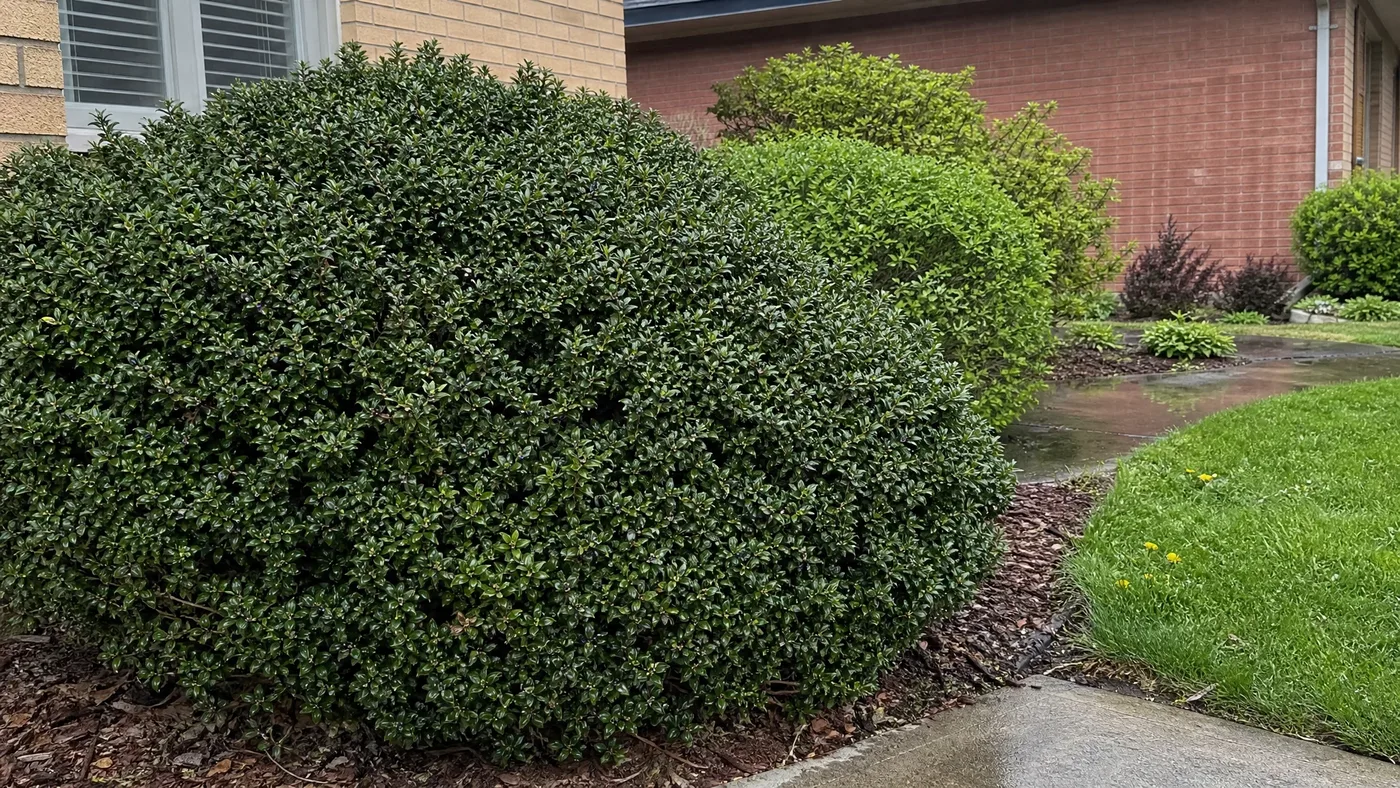
'Compacta' grows 6–8 feet tall and 6–10 feet wide, at a medium growth rate according to NC State. It is hardy in zones 6a to 8b, narrower than the species at 5a to 8b. The species grows 5–10 feet tall and 5–8 feet wide, so the cultivar is similar in height and somewhat wider.
A shrub that stays in a defined footprint and needs a pollinator to fruit is a very different animal from a tree that sets heavy crops on its own. We have more on the size side in our size and growth guide.
The Idea That Every Holly Is on a Banned List
This belief usually starts with one holly appearing on a list and spreads to all of them. Lists do not work that way.
Invasive plant lists name species, not genera. A state that restricts one holly says nothing about another, and the Florida assessment above rates Ilex crenata separately as not a problem species. So the belief is false as a blanket claim.
It can still matter for you in one narrow way. Compact Japanese holly is sold across zones 6 to 8, and that band covers many states, each with its own list. Our guide to hardiness zones shows where the plant performs best. Where you are inside that band decides which list applies.
When you read a list, look for the full botanical name and not just the word holly. An entry for one Ilex species is not an entry for the cultivar you are buying, and a common name alone can mislead in either direction.
Our position is simple. Do not rule the plant out because of its genus, and do not assume it is cleared everywhere because Florida cleared it. Read your own state's list once, look for the species name, and move on with a documented answer.
What a State Rule Could Change About Buying
Listing risk is the one part of this question a planner cannot fully remove, so it helps to know how it works.
Why Status Is a Snapshot
A list entry reflects what was known on the day someone assessed the plant, which is why the dates matter.
Florida's assessment has been revisited three times since 2005, which tells you a status is a snapshot and not a permanent ruling. A species rated fine today could be rated differently after new reports of spread. That has not happened with this holly in the sources we have, but it is the right risk to price in, the way you would price in a future pest problem.
Before-You-Buy Checklist
The cost of checking is small, and it is easiest before you settle on quantities. Run through these points once.
- Look up your state's invasive plant list or council website and search for Ilex crenata by its botanical name.
- Ask your local extension service whether any county or regional list differs from the state list.
- Confirm the tag reads Ilex crenata 'Compacta', so you know which plant the list entry refers to.
- Check whether a rule restricts sale, planting or both, since the two are not always the same.
- Keep the tag or receipt, so you can show later which plant you bought and when.
Our buying guide covers container sizes once the legal question is settled.
The Cleanup Bill Compact Japanese Holly May Leave
The bigger risk to your budget is probably not invasiveness. It is size, and the search for "invasive roots" is mostly a question about size.
The Invasive Roots Question
One of the most common questions we get is whether the roots will crack a foundation or lift paving. Here is what the sources say.
Our sources do not flag aggressive or damaging roots for this holly, so we will not claim a risk they do not report. What they do show is a plant that fills a large footprint. At 6–8 feet tall and 6–10 feet wide, mature plants are real shrubs, not the knee-high mounds many buyers picture.
A shrub that wide pressed against a wall will be hard to live with whatever its roots do, and the branches reach the wall first. For a planting next to a house or walk, plan around that full width from the start. If a hard surface is a concern in your yard, ask your local extension service about your soil and structure.
Removal and Replacement Costs
Two different bills could arrive years from now, and they have different causes. One comes from a plant that outgrew its place, and the other from a plant that did not last.
Taking out a mature holly of that size is a digging job, with labor and hauling, not a quick pull. The way to avoid the bill is to give plants room from the start, as laid out in our hedge spacing guide. Shearing keeps a plant tidy, but it does not shrink the root mass you would eventually dig out.
Replacement is the other cost. Spider mites and nematodes are occasional pests, and heat and humidity in zones 8 and 9 are hard on it. If you garden at the warm end, budget for the chance that some plants will not last ten years. That is a maintenance cost, not an ecological one, and it is far smaller than clearing a species that has escaped.
Birds, Berries and the Spread Worry
The last version of the worry is that birds carry the small black berries into nearby woods.
What Would Have to Line Up
Spread by birds needs a whole chain of events, and it helps to list the links one at a time.
Our sources do not document birds spreading this holly, and we will not invent a finding. In principle, any bird that eats fruit can move seed, so the claim cannot be dismissed outright. But several things have to line up.
You need a female plant, a male within pollination range, a fruit crop, a bird that takes it, and a spot in the wild where a seedling survives. Remove any one of those links and the chain breaks. In most yards, at least one link is missing from the start.
Measuring the Fruit Available to Move
The other half of the bird question is how much fruit there is to carry in the first place.
The fruit itself is modest. It is small, black and berrylike, and it sits low under the foliage. It ripens in early fall and stays on the plant into spring, so it is available for months, but only on females that were pollinated.
Humans who eat the berries can get a minor toxic reaction, and our toxicity guide covers that side. The plant is also only mildly resistant to deer, which matters for browsing and has no bearing on seed.
The One Lever You Control
If you want to cut the chance to near zero, there is a single decision that does it.
The lever is the male plant. Without one nearby, females do not set fruit. If you plant a hedge from one source and see no berries, that is the system working as intended. It is a choice you make when buying, and it costs nothing extra.
Ten Years of Compact Japanese Holly, Risk Settled
Over a decade, we rate the invasive risk low and the size risk real. The plant needs a male nearby to fruit, Florida's assessors have found no problem three times, and the sources we use do not report spread or damaging roots. Plan for the footprint, not for seedlings.
Compact Japanese Holly
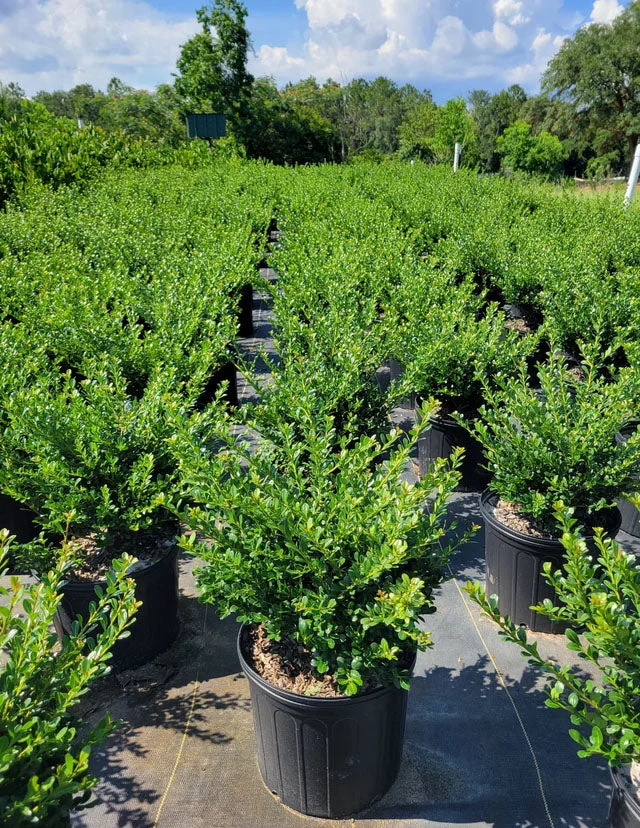
Nursery-grown Compact Japanese Holly in sizes from 1 Gallon Shrub, shipped to your door.
From $80.55
Shop Now →Check your local list once before you buy, and you are done with this question. Customers come back to us for tidy, reliable compact Japanese holly they can plant without second-guessing, and as a small business of growers with our own farms, we stand behind every plant we grow and sell.