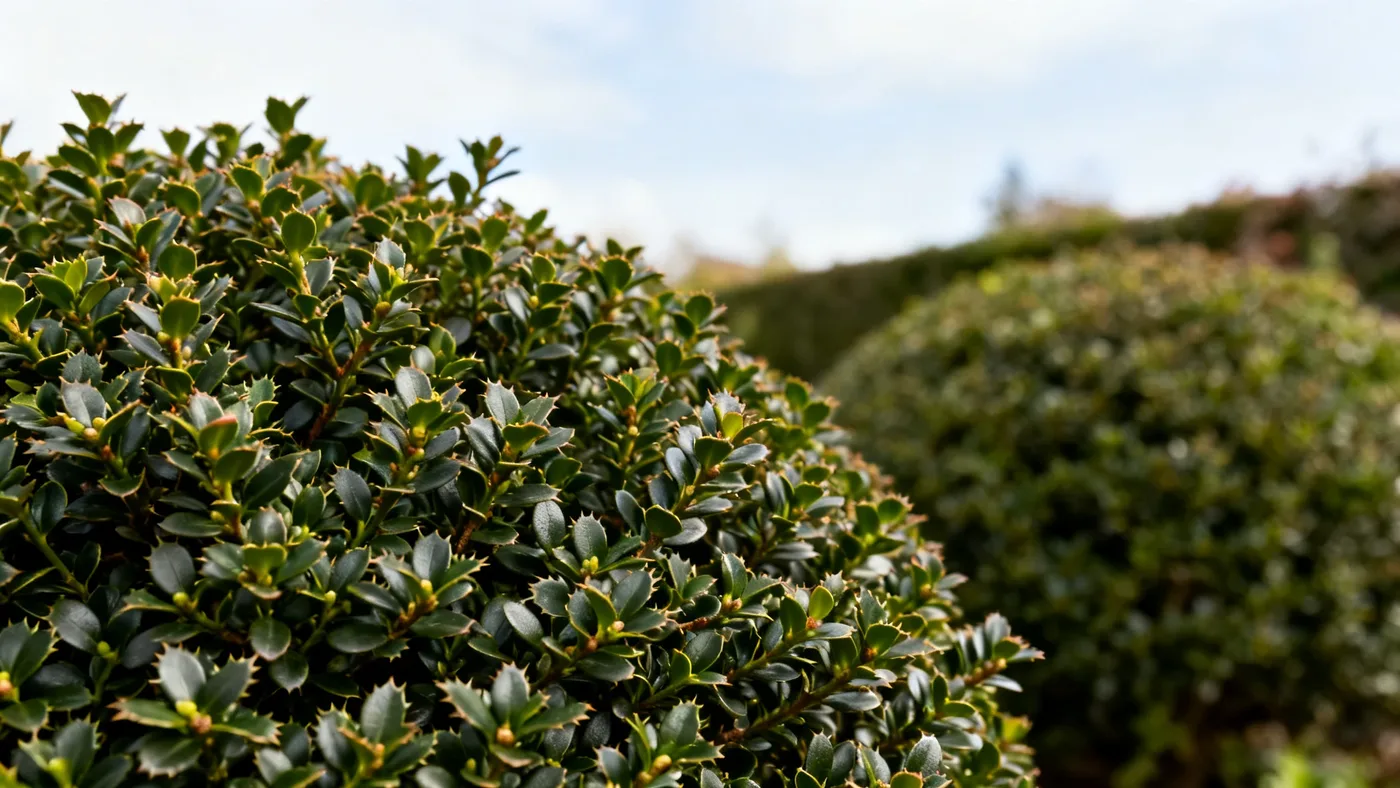
How Often Should You Water Compact Japanese Holly?
Watering Compact Japanese Holly correctly is one of the easiest ways to keep your shrubs healthy and dense. Unlike drought-tolerant plants that thrive on neglect, this evergreen prefers consistent soil moisture and won't tolerate complete drying out. The good news is that once you understand what the plant needs, your watering routine becomes straightforward and predictable.
What You'll Need
- Soaker hose or drip irrigation line (recommended for best results)
- Garden hose with a nozzle or spray wand
- Watering can (for container plants)
- Moisture meter (optional but helpful for beginners)
- Mulch (2 to 3 inches, pine bark or composted leaves)
- Well-draining soil amendment if your soil is clay-heavy
How Often to Water: The Basics
Compact Japanese Holly needs moderate water, supplied consistently. This means the soil should stay moist but never waterlogged. During the growing season (spring through early fall), plan on watering deeply once or twice per week, depending on rainfall and soil type. In-ground plants in zone 6, 7, or 8 will have slightly different schedules based on your local rainfall patterns.
A newly planted holly requires more attention than an established one. For the first season after planting, water regularly to help the root system develop. Once the plant has been in the ground for a year or more, it becomes moderately drought-tolerant, though it still prefers consistent moisture rather than boom-and-bust cycles.
Step-by-Step Watering Guide
- Check soil moisture before watering. Stick your finger into the soil 2 inches deep, just beyond the root zone. If it feels moist, wait another day or two. If it feels dry, water immediately. This simple check prevents both overwatering and underwatering.
- Water deeply at the base. Direct water to the soil, not the foliage. A soaker hose is ideal because it delivers water slowly and steadily right where the roots can access it. If using a regular hose, apply water in a gentle spray close to the ground for 10 to 15 minutes per plant, or until the soil feels thoroughly moistened 6 to 8 inches down.
- Soak until runoff stops. In the first minute or two, water may run off the surface, especially if the soil is dry or compacted. Keep watering until the runoff clears and the soil absorbs the water. This signals that moisture has penetrated the root zone.
- Water in early morning when possible. Watering between dawn and 9 AM reduces evaporation and allows foliage to dry quickly, lowering the risk of fungal issues. If you must water in the evening, aim for late afternoon at least 3 to 4 hours before sunset.
- Mulch after planting. Apply 2 to 3 inches of mulch around the base, keeping it 2 inches away from the stem. Mulch retains soil moisture and moderates soil temperature, reducing water loss on hot days.
- Adjust frequency based on rainfall. If your area receives 1 to 1.5 inches of rain in a week, you may skip a scheduled watering. Measure rain in a straight-sided container or check your local weather data. In dry weeks with no rainfall, stick to your regular schedule.
Seasonal Watering Schedule
Watering needs shift with the seasons. Compact Japanese Holly is evergreen, so it never goes fully dormant, but its water demand varies.
Spring (March to May in zones 6-8): Water regularly as new growth emerges. Soil dries faster in spring winds. Plan for one deep watering per week unless rainfall has been consistent. Newly planted shrubs need water 2 to 3 times per week during this season.
Summer (June to August): This is peak water demand. The combination of heat and new growth means you may need to water twice per week, especially in sandy soils or during heatwaves. Container plants will need watering every other day or even daily. Check soil moisture more frequently during summer dry spells.
Fall (September to November): As growth slows and temperatures drop, reduce watering to once per week. The plant is moving into dormancy and requires less water. However, do not let the soil dry out completely, as the root system continues to absorb water even in cooler months.
Winter (December to February): Watering is minimal but not zero. Evergreens like Compact Japanese Holly can suffer winter desiccation if soil stays too dry during cold spells. In zones 6-8, check the soil once or twice a month. If it feels bone-dry, water deeply on a mild day when the soil is not frozen. One thorough winter watering per month is often enough.
Container Plants vs. In-Ground
Container-grown Compact Japanese Holly has different water needs than in-ground plants because pots dry faster. Soil in containers, especially in summer, can dry out in 2 to 3 days. Check container soil daily by pressing your thumb into the surface. If the top 1 inch feels dry, water thoroughly until it drains from the bottom. In peak summer, daily watering is normal for containers.
Use a high-quality potting mix, not garden soil, to ensure good drainage. A pot with drainage holes is non-negotiable. In-ground plants have access to deeper soil reserves and rainfall, so they need less frequent watering once established.
Common Watering Mistakes to Avoid
Shallow, frequent watering: Sprinkling the soil lightly every day encourages shallow root growth and makes the plant vulnerable to stress. Always water deeply enough to reach the root zone, 6 to 8 inches down.
Watering on a fixed schedule: Calendar-based watering ignores weather. A schedule that works in March may be wrong in July. Check soil moisture before each watering rather than watering by the clock.
Overwatering: This is the most common problem. Soil that stays soggy for days encourages root rot and fungal diseases. Compact Japanese Holly does not like wet feet. If drainage is poor, amend the soil with compost or perlite, or build a raised bed.
Forgetting to water new plantings: A shrub planted in spring needs consistent water all summer to establish. Missing waterings during the first season can set back growth or kill a young plant.
Neglecting container watering: Pots dry out faster than ground soil and are easy to overlook. Containers need as much or more attention than in-ground plants, especially in summer.
How to Tell If Your Holly Needs Water Adjustment
Signs of underwatering: Leaves turn dull, growth slows, or the foliage looks slightly wilted despite humidity. In severe cases, leaves may drop. Soil pulls away from the pot edge (container plants) or feels hard and cracked.
Signs of overwatering: Foliage yellows or blackens from the base outward. Stems feel soft or mushy. Soil smells like wet compost or ammonia. Fungal spots appear on leaves. In containers, soil stays wet even days after watering.
If you see these signs, adjust your watering frequency. For underwatering, increase frequency or apply water more deeply. For overwatering, let the soil dry out more between waterings and check drainage.
Quick Reference Watering Checklist
| Season | Newly Planted (First Year) | Established (Year 2+) | Container Plants |
|---|---|---|---|
| Spring | 2 to 3 times per week | 1 time per week | Every 2 to 3 days |
| Summer | 2 to 3 times per week | 1 to 2 times per week | Daily or every other day |
| Fall | 1 to 2 times per week | 1 time per week | Every 2 to 3 days |
| Winter | Once per month if soil is dry | Once per month if soil is dry | Every 2 to 4 weeks, less often |
Before every watering, check soil moisture 2 inches deep. If it feels moist, wait. Water only when soil begins to feel dry. In zones 6-8, rainfall patterns may shift your frequency. Always let rainfall count toward your weekly total.
For more details on caring for your Compact Japanese Holly year-round, see the complete care guide.