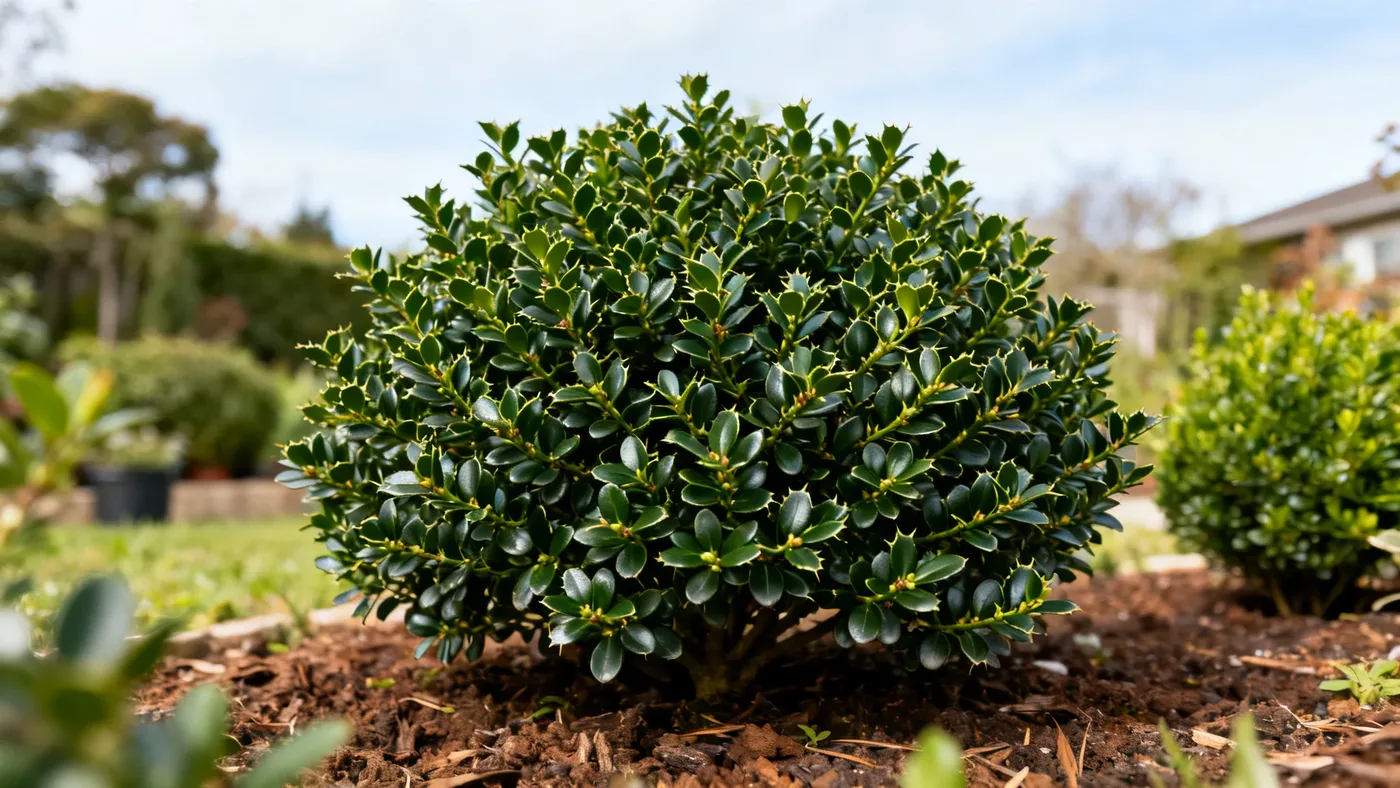
Common Pests and Diseases That Attack Compact Japanese Holly
Even the toughest evergreens aren't immune to problems, and Compact Japanese Holly is no exception. While this densely leafed shrub is generally hardy and disease-resistant, certain pests and diseases can weaken its foliage if left unchecked. Whether you're dealing with yellowing leaves, visible damage to the stems, or spots on the foliage, knowing what to look for makes all the difference between a thriving hedge and one that's struggling.
The good news: most common problems with Japanese Holly Compacta are preventable with proper care and early intervention. This guide walks you through the most frequent culprits, how to spot them before they cause serious damage, and what to do about them.
1. Spider Mites: Webbing and Stippled Foliage
Spider mites are among the most common compact japanese holly pests, especially in warm, dry conditions. These tiny arachnids are nearly invisible to the naked eye, but their damage is unmistakable: fine webbing on stems and leaves, combined with a stippled or speckled appearance on the foliage. As the infestation worsens, leaves may turn pale yellow or bronze and eventually drop. Infestations often explode in late summer, particularly if your shrub is water-stressed or planted in a hot, exposed location.
Spider mites thrive in dry conditions, so your first line of defense is consistent watering. Keep Compact Japanese Holly moderately moist during the growing season, especially during dry spells. A strong spray of water from the hose can dislodge many mites early in an infestation. If the problem persists, insecticidal soap or neem oil applied every 7 to 10 days for three applications can break the cycle. Always spray in early morning or late evening to avoid leaf burn, and thoroughly wet both the tops and undersides of the leaves where mites hide.
Practical takeaway: Regular watering is your best prevention. Check the undersides of leaves weekly during warm months. If you spot fine webbing or stippled leaves, act quickly with water spray or insecticidal soap.
2. Scale Insects: Armored Pests on Stems and Leaves
Scale insects, particularly black scale, are another frequent compact japanese holly disease issue and pest problem. These pests look like tiny bumps or shells stuck to stems, branches, and leaf undersides. Black scale appears as dark, round armored bodies, often in clusters. Unlike spider mites, scales don't move once they've settled, making them look like part of the plant. They feed on sap and can cause overall decline, with leaves yellowing, wilting, or dropping prematurely if the infestation is severe.
Scale insects are hardest to control when they're young and still mobile (the crawler stage). Once they've settled under their protective armor, sprays are far less effective. Inspect your plants regularly, especially the leaf undersides and branch crotches where scales congregate. For light infestations, a cotton swab dipped in rubbing alcohol applied directly to each scale will kill it. For heavier infestations, horticultural oil applied in late winter before new growth emerges targets the vulnerable overwintering stage. Repeat every 10 to 14 days if needed. Always follow the product label for timing and application rates.
Practical takeaway: Catch scale early by inspecting undersides of leaves and stems. Light infestations respond well to rubbing alcohol swabs. For established infestations, winter oil spray is your best bet.
3. Leafminer: Tunneling Damage Inside the Leaves
Leafminers are insects whose larvae tunnel inside the leaves of Compact Japanese Holly, creating distinctive serpentine or blotchy patterns. The damage looks like pale, winding trails or larger whitish patches within the leaf tissue. Affected leaves may drop prematurely, thinning the foliage and making your hedge look sparse. The damage is primarily cosmetic rather than life-threatening to the plant, but repeated defoliation weakens growth and disrupts the neat appearance you want in a formal hedge.
Leafminer control is challenging because the larvae are protected inside the leaf tissue where sprays cannot reach them. The best strategy is prevention: keep your plant healthy with consistent, moderate watering and avoid overfertilizing, which encourages soft tender growth that's more attractive to pests. Once you spot the damage, remove heavily infested leaves by hand if the infestation is light. For serious problems, horticultural oil spray in early spring before miners enter can help reduce populations. Some gardeners find that neem oil applied every 7 to 10 days in spring provides partial control, though results vary.
Practical takeaway: Leafminer damage is mostly cosmetic. Remove heavily affected leaves, keep the plant healthy, and consider early spring oil sprays for persistent problems.
4. Phytophthora Root Rot: A Soil-borne Disease
Phytophthora root rot is a soil-borne fungal disease that attacks the roots of Compact Japanese Holly, particularly in poorly drained or waterlogged soil. This is one of the most serious compact japanese holly diseases because damage occurs underground before you notice symptoms above ground. Early signs include wilting, yellowing foliage, and stunted growth despite adequate water. In advanced stages, leaves drop and branches die back. The problem is most severe in heavy clay, compacted, or chronically wet soil where the fungus thrives.
Prevention is far easier than cure with root rot. The most critical factor is soil drainage: ensure your Compact Japanese Holly is planted in well-drained, humus-rich loam. Avoid planting in low spots where water pools. If you inherit a poorly drained site, consider amending the soil with compost or raising the planting bed 6 to 12 inches above grade. Never allow the soil to stay waterlogged. If root rot has already taken hold, there's no chemical cure. Your only option is to dig up the shrub, inspect and prune away any soft or discolored roots, and replant in fresh, well-drained soil in a new location if possible.
Practical takeaway: Root rot thrives in wet soil. Ensure excellent drainage at planting time. If you notice wilting and yellowing despite adequate water, suspect root rot and prepare to replant.
5. Yellowing Leaves: Chlorosis from Alkaline Soil
One of the most common problems with Japanese Holly Compacta is yellowing leaves caused by chlorosis in alkaline soil. Chlorosis occurs when the plant cannot absorb enough iron from the soil, even though iron may be present. This happens in soil with a pH above 6.5, which locks up iron and makes it unavailable to the roots. Affected leaves show yellowing between the veins while the veins themselves remain green, creating a netted or mottled appearance. Compact Japanese Holly leaves turning yellow in this pattern signal a pH problem rather than disease or pest damage.
Compact Japanese Holly prefers acidic soil in the 5.0 to 6.5 pH range. If your soil is naturally alkaline, a soil test will confirm your pH and nutrient levels. You can lower pH by adding elemental sulfur or aluminum sulfate to the soil, though results take time (several months). An easier short-term fix is a foliar spray of chelated iron in early spring, which delivers iron directly through the leaves. Some gardeners also apply an acid-forming fertilizer designed for acid-loving plants like azaleas and hollies in spring. Ultimately, if your soil is too alkaline, consider growing your Compact Japanese Holly in pots filled with acidic potting mix, which gives you complete control over soil chemistry.
Practical takeaway: Yellow leaves with green veins signal chlorosis. Test your soil pH. For permanent fixes, add sulfur or grow in containers with acidic mix. For quick relief, use chelated iron spray.
6. Winter Burn and Foliage Bronzing: Cold Damage in Exposed Sites
Winter burn and leaf bronzing occur when Compact Japanese Holly is exposed to harsh winter winds, intense sun, or extreme cold without protection. The foliage may turn bronze, yellow, or brown, and new growth in spring may be sparse or distorted. This damage is not a disease or pest but rather environmental stress. It's most common in plants located in exposed, windy sites, especially along wind tunnels between buildings or on exposed hillsides. Plants at the colder end of the hardiness range (zone 6) can also see more winter damage, particularly if ice or snow is heavy.
Prevention is the best strategy. When planting Compact Japanese Holly, choose a location with good air circulation but some protection from harsh winter winds. East or north-facing walls that buffer prevailing winter winds are ideal. Mulch the base of the plant with 2 to 3 inches of organic mulch to insulate the root zone. In the first year or two after planting, consider wrapping the plant loosely with burlap in late fall to shield it from wind and heavy snow. Avoid pruning in late summer or fall, which encourages tender new growth susceptible to winter damage. Prune in late winter to early spring instead, just as new growth is starting.
Practical takeaway: Choose a wind-protected planting site. Mulch well and avoid late-season pruning. Wrapping with burlap the first winter helps young plants survive harsh conditions.
7. Black Vine Weevil: Root and Foliage Damage from Soil and Leaves
Black vine weevil is a two-stage pest: adult weevils chew notches in leaf margins (typically creating a scalloped or notched appearance at the leaf edge), while their soil-dwelling larvae feed on roots underground. Heavy adult feeding can defoliate a plant, while larval root damage weakens growth and can lead to wilting or decline. Black vine weevil is most active in spring and early summer, with larvae overwintering in the soil. The adult weevils are flightless and nocturnal, so you may only spot the leaf damage during the day.
Monitor for notched leaves in spring, especially on lower foliage. If you spot fresh damage, hand-pick adults at night with a flashlight (they hide in the soil or debris during the day) or use a beating sheet: hold a white cloth under a branch and tap it gently; adult weevils will fall onto the cloth. For serious infestations, an insecticide containing imidacloprid applied to the soil in spring targets the larvae before they mature. If using any systemic insecticide, follow all label directions carefully and be aware of toxicity concerns to pets and pollinators. A thick layer of mulch can trap some larvae during pupation and expose them to predators.
Practical takeaway: Look for notched leaf edges in spring. Hand-pick adults at night if populations are low. For heavy infestations, consider a soil-applied insecticide or thicker mulch layers.
8. Canker: Stress-Related Dieback on Branches
Canker is a stress-related disease that appears as sunken, darkened, or girdled areas on branches and stems of Compact Japanese Holly. The affected branch typically dies back beyond the canker, causing dieback or sparse growth in that section. Canker is not caused by a single pathogen but rather by weakened plant tissue being invaded by various fungi or bacteria after stress. Common stress factors include root rot, severe drought, winter injury, or physical damage from pruning or weather.
Prevention focuses on keeping your plant healthy and stress-free. Ensure proper soil drainage, consistent but moderate watering, and protection from extreme conditions. Prune out dead or damaged wood promptly to prevent disease entry. If a branch shows canker, prune it out just beyond the affected area, cutting back to healthy wood or to the branch collar at the base. Sterilize your pruning tools between cuts (wipe with rubbing alcohol or dip in a 10% bleach solution) to avoid spreading disease. Do not apply wound dressing or pruning seal; research shows these actually trap moisture and slow healing.
Practical takeaway: Canker signals underlying stress. Address drainage, watering, or winter protection issues. Remove affected branches. Keep plants healthy to prevent stress-related disease.
9. Black Root Rot: Underground Disease
Black root rot is another soil-borne disease that attacks the roots of Compact Japanese Holly, similar to Phytophthora but caused by different pathogens. The disease is most problematic in heavy, poorly drained soil. Symptoms include yellowing foliage, wilting despite adequate moisture, stunted growth, and eventual decline. The roots themselves may appear dark or blackened, with a soft or mushy texture.
Like Phytophthora root rot, the best medicine is prevention through excellent soil drainage and proper watering practices. If root rot is confirmed or suspected, your options are limited. Dig up the plant, prune away affected roots, and replant in fresh soil with better drainage. Some gardeners have success repotting severely affected plants into containers with fresh potting mix to give them a chance to recover under controlled conditions. Once root rot is established in the garden soil, consider planting resistant species in that location, or amend the soil heavily with compost and ensure future plantings are in raised beds with new soil.
Practical takeaway: Black root rot thrives in wet soil. Prevent it with good drainage. If detected, dig and replant in new soil. Severely affected plants may recover in containers.
Quick Reference: Compact Japanese Holly Pests and Diseases
| Problem | Symptoms | When Most Active | Best Prevention |
|---|---|---|---|
| Spider Mites | Fine webbing, stippled or pale leaves, leaf drop | Late summer, dry conditions | Regular watering, water spray on foliage |
| Black Scale | Dark bumps on stems and undersides, yellowing leaves | Year-round, especially late winter to spring | Winter oil spray, weekly leaf inspection |
| Leafminer | Pale trails or blotches inside leaves | Spring through summer | Healthy plant, hand removal, early spring oil spray |
| Phytophthora Root Rot | Wilting, yellowing, leaf drop, root damage | Year-round in wet soil | Well-drained soil, avoid waterlogging |
| Chlorosis (Yellowing) | Yellowing leaves with green veins, pale new growth | Growing season in alkaline soil | Acidic soil (pH 5.0-6.5), chelated iron spray |
| Winter Burn | Bronze or yellow foliage, dieback in spring | Winter, especially zones 6-8 | Wind protection, mulch, avoid late-season pruning |
| Black Vine Weevil | Notched leaf edges, wilting, root damage | Spring and early summer (adults) | Hand-picking, mulch layer, early spring monitoring |
| Canker | Sunken or darkened branch sections, branch dieback | Year-round, worsens under stress | Healthy plant, good drainage, prune out affected wood |
| Black Root Rot | Yellowing, wilting, stunted growth, soft roots | Year-round in wet soil | Well-drained soil, consistent moisture, avoid waterlogging |