Compact Japanese Holly vs Dwarf Yaupon Holly: Which to Plant?
Two zone ranges settle most of this comparison. Compacta holly is rated for USDA zones 6a to 8b, while yaupon holly, the species behind the dwarf yaupon sold as a boxwood substitute, is listed for 7a to 9b. If your last boxwood-style hedge died in salt spray or summer heat, one of these two shrubs is probably your fix and the other probably is not.
Choose wrong and you replace a row of shrubs in year three. Choose right and you get a dense evergreen mound that holds its outline with light trimming. We already compare Compacta with boxwood in our Compact Japanese Holly vs boxwood guide, so this one covers the other common alternative. Read on for range and cold hardiness, heat and salt, leaf texture, mature size, soil, pruning effort, and a final sorting by site, with a verdict in every section.
Where Compact Japanese Holly Stops and Yaupon Keeps Going
Range explains more of this comparison than any other factor, so check your zone before you look at anything else.
Native Ground Predicts Performance
The two shrubs come from different continents, and the difference shows up first in how they handle climate extremes.
Japanese holly, the species Compacta comes from, is native to Japan and Korea. Yaupon is native to the eastern United States and Mexico. That makes it a Southern plant in the plainest sense: it grew up with long hot summers, sandy coastal ground and salt in the air. Compacta is an import that prefers things milder.
What Changes North of Yaupon's Comfort
If your winters are cold, the choice is mostly made for you, and here is how the zones divide it.
Compacta grows in zones 6a through 8b. The yaupon species grows in zones 7a through 9b, so the two overlap across zones 7 and 8. The Japanese holly species reaches down to zone 5a, but Compacta does not carry that rating. Do not plant Compacta in zone 5 because the species page says it can.
Zone 6: plant Compacta. We would not bet a hedge on yaupon below its listed range. For cold-season details, see our guide to hardiness zones for Compact Japanese Holly.
Zones 7 and 8: both are rated, so heat, salt, soil and looks decide it. The next sections sort those out.
Zone 9: choose yaupon. Compacta is outside its listed range there.
Verdict on range: Compacta wins the cold end, yaupon wins the warm end, and the middle is open.
Heat and Salt Tolerance Along the Coast
If spray or hot pavement killed your last hedge, this section is the one that applies to you.
Salt Spray and Sandy Shorelines
Salt burns evergreen leaves from the windward side first, and it does so every season.
Yaupon can withstand drought, salt spray, and occasional flooding. None of our sources make a salt claim for Compacta, so treat it as unproven. One of the most common questions we get from coastal customers is whether Compacta can stand in for yaupon at the beach. We say no.
Heat, Humidity and Hot Pavement
Summer heat is the second thing that separates them, and it is where Japanese holly most often disappoints.
Japanese holly may not thrive in areas with high heat and humidity such as the southern United States. A strip between a driveway and a south-facing wall is the harshest version of that, because pavement throws heat back at the foliage all afternoon. Compacta is listed for full sun, but "full sun" in zone 6 and "full sun" against hot concrete in zone 8 are not the same thing.
Verdict: if your site has salt spray, reflected heat, or both, plant yaupon. If you garden inland in a mild climate, heat is not a reason to skip Compacta.
Foliage Texture Up Close on Compact Japanese Holly
Both shrubs are sold as boxwood stand-ins, so the question here is which one reads as boxwood from the street.
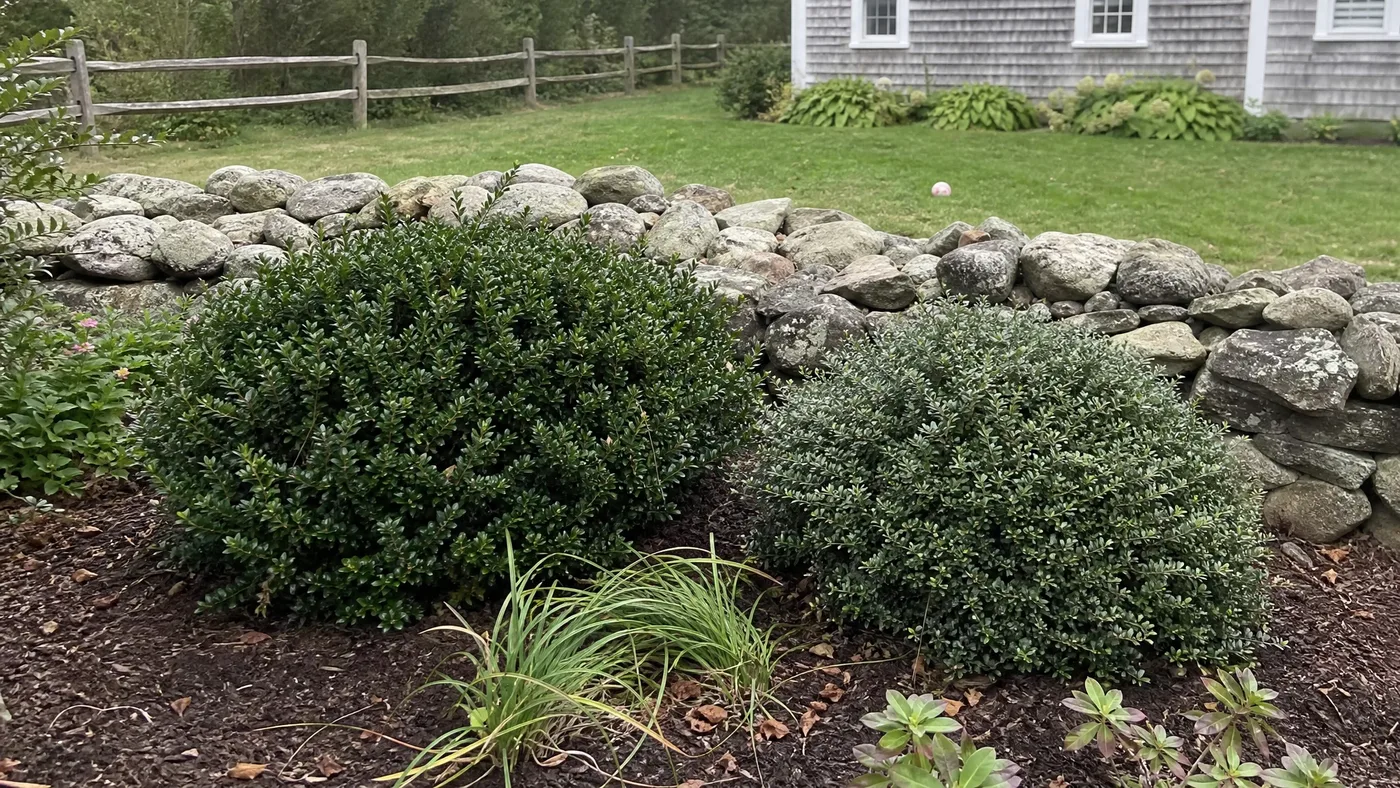
Compacta. The species is dense, multi-stemmed, rigid and compact with a rounded habit. That structure is what gives Compacta its fine, tight surface: small leaves packed on stiff twigs, so a clipped plant looks like one solid mound. This is the closer match for a formal boxwood look. Flowers are small, white and fragrant in May to June. They are modest, but they are there.
Dwarf yaupon. Yaupon leaves are small, leathery and bright green, and they are not prickly like other hollies. Expect a brighter, slightly looser surface than Compacta. Yaupon is also dioecious, with separate male and female plants, so red fruit needs both sexes nearby. If you want berries, ask which sex you are buying.
We could not find a source that rates Compacta's leaf edges, so run your hand along a branch of each before you plant them along a walkway or near children.
Verdict on look: for a tight, formal, clipped line, choose Compacta. For a softer, brighter green that tolerates a less manicured finish, choose yaupon. Both stay evergreen, so the winter picture is similar and the real difference is the leaf surface in summer.
Mature Size and Shape Without Constant Shearing
Final size decides how much trimming you will do, so plan for year five and beyond rather than the nursery pot.
Compacta Is Bigger Than Its Name
The name "compact" describes the habit, not a low ceiling, and plenty of buyers are caught out by that.
Compacta grows 6 to 8 feet tall and 6 to 10 feet wide, with a medium growth rate. That is wider than the species, which reaches 5 to 10 feet tall and 5 to 8 feet wide. Our own guide to Compact Japanese Holly size and growth covers the timing. The practical point is spacing. Plant it in a bed only 3 feet deep and you will be shearing it hard every year.
Dwarf Yaupon and the Small-Tree Habit
Yaupon needs a different kind of planning because of what the species does when it is left alone.
Yaupon is a shrub or small tree. The dwarf selections are bred to stay shrubby, but the parent tendency toward upright, open growth is why an unclipped yaupon hedge can loosen. We will not quote a mature size for dwarf yaupon because our sources do not give one. Check the tag and your local extension service before you set spacing.
Verdict: Compacta needs less shaping to look tidy, because its dense rounded habit does the work. Give it room to reach its width and you are trimming for edges, not for form. Yaupon takes more guidance to stay a mound.
Soil and Moisture Demands of Compact Japanese Holly
Soil is where Compacta is pickier than its reputation, and where yaupon is easiest.
Oregon State's landscape plant database says the species prefers light, moist, slightly acid soils. NC State's page for the cultivar adds that Compacta is intolerant of alkaline soil. That is the line to watch. Soil next to new concrete, or in limestone country, often tests alkaline, and yellowing foliage there is a common result. Test before you plant. Our guide to soil and drainage for Compact Japanese Holly goes through the fixes.
You will often hear that Japanese holly tolerates clay. The species does tolerate drought, shade, air pollution, poor soils and clay soils, but that describes the species in general. We would not push a cultivar with an alkaline-soil warning onto sticky, high-pH clay that holds water.
Yaupon is the more forgiving plant. It tolerates a wide range of soil types and can handle drought and occasional flooding.
Verdict on tricky soils:
- Acidic, well-drained, moderately moist soil: Compacta does well.
- Alkaline soil: choose yaupon.
- Heavy clay that stays wet after rain: choose yaupon.
- Dry, sandy ground with little water available: yaupon again, since drought tolerance is part of its listing.
Upkeep If You Dislike Pruning
Neither plant is a no-maintenance shrub, but the work is different, and you can pick the one whose chores you will actually do.
Shearing Effort
The honest answer on shearing is that site and spacing matter more than which holly you pick.
Compacta in a bed that fits its 6 to 10 foot width needs light trimming to hold its rounded outline. Crowd it and you are on the shears all summer. Our guide to pruning Compact Japanese Holly shows how to keep that to a single pass. Yaupon, being a species that can grow into a small tree, tends to send out long shoots that break the outline. If you want a clipped look, expect to trim it more often.
Cleanup and Problems
Beyond shaping, the chores are pests, plant health and watering.
Spider mites and nematodes are occasional pests of Compacta, and holly leaf blight is a concern for the species. In a hot, humid climate those stresses add up, which is another reason Compacta belongs in milder places. Yaupon's drought and flood tolerance mean fewer rescue waterings in a bad summer. Sources give us no pest list for yaupon, so ask your extension office what is common locally.
Verdict: in zones 6 and 7 with good soil, Compacta is the lower-effort choice. In heat, salt or poor soil, yaupon is lower effort because it will not need replacing.
Matching Compact Japanese Holly or Yaupon to Your Site
This is the short sorting. Find the line that matches your yard, and when two lines conflict, give weight to the hardest problem, which is usually salt or alkaline soil.
| Your site | Plant |
|---|---|
| Zone 6 winters | Compacta |
| Zone 9 or very hot summers | Dwarf yaupon |
| Salt spray or coastal wind | Dwarf yaupon |
| Reflected heat from pavement or walls | Dwarf yaupon |
| Acidic, well-drained soil in a mild climate | Compacta |
| Alkaline soil | Dwarf yaupon |
| Heavy clay that holds water | Dwarf yaupon |
| Tight, formal, clipped outline | Compacta |
| Brighter, looser, softer finish | Dwarf yaupon |
When Either One Works
Zones 7 and 8 with decent soil and no salt are the overlap, where both are rated and neither is a mistake.
There, choose on looks and on room. If you want the finer, denser surface and can give it up to 10 feet of width, plant Compacta. If you want something that will shrug off a dry summer or a wet spring, plant yaupon.
The Rule We Use for Compacta and Yaupon
Everything above reduces to one test: what is the hardest thing your site does to a shrub? If the answer is cold, alkaline soil, or nothing much at all, Compacta gives you the tighter, more formal mound. If the answer is salt, heat or soggy clay, dwarf yaupon will outlast it.
Compact Japanese Holly
Nursery-grown Compact Japanese Holly in sizes from 1 Gallon Shrub, shipped to your door.
From $80.55
Shop Now →So the rule of thumb is this. Mild, acidic, well-drained site means Compacta. Hot, salty or clay-heavy site means yaupon. As a small grower with our own farms, we care about getting this choice right because we grow and sell top-quality shrubs, and we would rather you plant the one that suits your ground the first time than fight the wrong holly in year three.