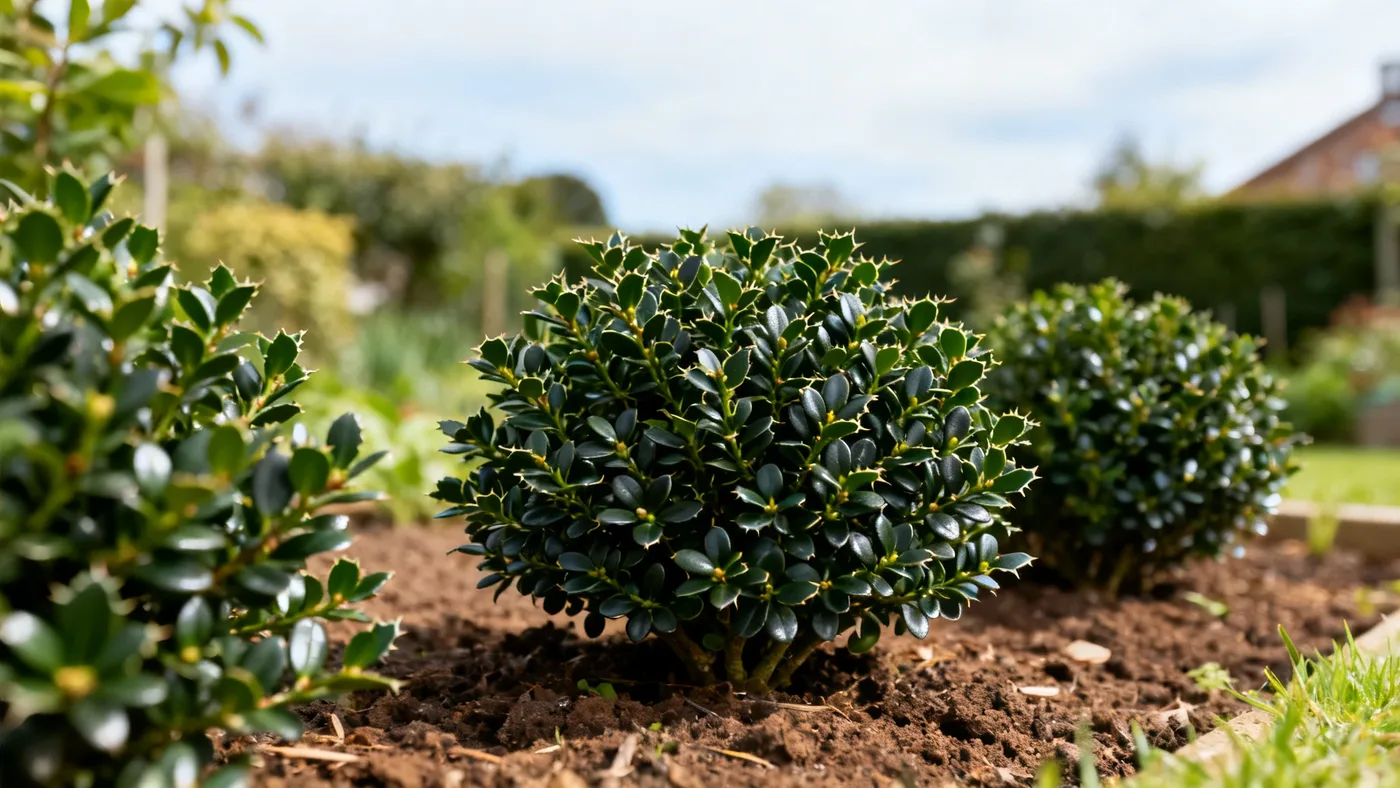
Compact Japanese Holly FAQ: Your Top Questions Answered
Compact Japanese Holly (Ilex crenata 'Compacta') is one of the most versatile evergreen shrubs for home gardens, but gardeners often have questions about its care, planting, and best uses. Below we answer the questions we hear most often, so you can grow this beautiful plant with confidence.
Basics and Plant Overview
What is Compact Japanese Holly?
Compact Japanese Holly is a dwarf evergreen shrub bred from the species Ilex crenata, which is native to Japan, Korea, and eastern China. It belongs to the Aquifoliaceae (holly) family and is prized for its small, finely toothed dark-green leaves that resemble boxwood. The plant is long-lived, commonly reaching 30 to 40 years or more with proper care, making it a solid investment for your landscape.
What USDA zones is Compact Japanese Holly hardy in?
Compact Japanese Holly is reliably hardy in zones 6 through 8, though some nurseries list it as hardy to zone 5b with winter wind protection. If you live in zone 5, plant in a sheltered location away from harsh cold winds and consider wrapping young plants during their first winter. Check your local extension office to confirm your hardiness zone and whether extra protection is needed in your area.
How large does Compact Japanese Holly get?
Mature plants reach 3 to 4 feet tall and 4 to 5 feet wide without heavy shearing. If left completely unsheared over many years, it can stretch to about 5 feet tall, though this is not the typical landscape form. With regular pruning, you can keep it shorter and maintain a tight, dense form that looks polished year-round.
What does Compact Japanese Holly look like?
It has small leaves, each under 1 inch long, that are dark glossy green with finely toothed margins and an oval shape. In late spring (May through June), it produces small white to greenish-white flowers that are inconspicuous and lack significant fragrance. The plant's dense, fine-textured foliage stays dark green year-round, and it may develop a slight bronze or yellow tint in harsh winters on exposed sites, though this fades as temperatures warm.
How fast does Compact Japanese Holly grow?
This is a slow-growing shrub, putting on roughly 3 to 6 inches of growth per year. You should expect 5 to 10 years to reach full mature size, so this is a plant to appreciate for the long term rather than an instant screen. The slow pace means less pruning overall and a stable, predictable landscape.
Planting and Site Selection
When is the best time to plant Compact Japanese Holly?
Plant in spring or early fall, ahead of the first frost in your region. Both seasons give the plant time to establish roots before winter dormancy or summer heat stress. Avoid planting in late fall, as the plant will not have sufficient time to develop roots before hard freezes arrive.
How far apart should I space the plants?
For a continuous low hedge, space plants 3 to 4 feet apart. For specimen plantings or foundation use, allow 4 to 5 feet between plants so each can develop its natural rounded form without crowding. Check our detailed guide on how to plant Compact Japanese Holly the right way for step-by-step instructions and spacing strategies for different uses.
What kind of soil does Compact Japanese Holly prefer?
The plant thrives in well-drained, humus-rich loam with a soil pH of roughly 5.0 to 6.5, which is acidic to slightly acidic. Work in 2 to 3 inches of compost or aged bark before planting to improve drainage and add organic matter. The more organic matter you incorporate, the better the soil will hold moisture while still draining freely after rain.
Can I plant it in clay soil?
Yes, but only if you improve drainage first; Compact Japanese Holly tolerates clay if the soil drains adequately, but it will not survive in wet or soggy soils. Mix in sand and compost to break up the clay, or consider building a raised bed so water drains away quickly. The biggest risk with clay is root rot if water pools around the plant after rain or snowmelt.
Is Compact Japanese Holly a good boxwood replacement?
Yes, it is one of the best boxwood substitutes, especially because it shows better resistance to boxwood blight, a serious fungal disease affecting many boxwood plantings. The foliage texture, growth habit, and formal pruning capability are nearly identical to boxwood, making the transition seamless in existing landscapes. If boxwood blight is present in your area, switching to Compact Japanese Holly is a smart preventive move.
Watering and Soil Moisture
How often should I water Compact Japanese Holly?
Water regularly until the plant is established (roughly the first growing season), keeping the soil consistently moist but not waterlogged. After that, provide moderate and consistent moisture, never allowing the soil to dry out completely. In dry spells, water deeply once a week if it has not rained; container plants need water more often because pots dry faster than garden soil.
Is Compact Japanese Holly drought tolerant?
Once established, it has moderate drought tolerance, meaning it can survive dry periods better than many broadleaf evergreens, but it performs best with regular moisture. Do not let it stress for water year after year if you want it to look its best. A 2 to 3 inch layer of mulch around the base helps retain soil moisture and keeps roots cool in summer.
What happens if the soil stays wet?
Wet or soggy soil leads to root rot, especially Phytophthora root rot and black root rot, which can kill the plant. If your site has poor drainage or tends to stay wet, either improve drainage through amendment or raised beds, or choose a different location. Poor drainage is one of the most common reasons Compact Japanese Holly fails in home landscapes.
Sun and Light Requirements
How much sun does Compact Japanese Holly need?
The plant does best in full sun to light shade, with the densest, most attractive foliage developing in full sun to part shade. In hot southern regions, afternoon shade helps protect the foliage from scorching and keeps it darker and glossier. At least 4 to 6 hours of direct sun per day will keep the plant healthy and full.
Can Compact Japanese Holly grow in full shade?
It will tolerate part shade, but foliage will become thinner and looser in heavy shade. For the tight, dense form that makes this plant so useful in hedges and formal designs, give it as much light as your site allows. If your only option is deep shade, this plant is not the right choice for that location.
Pruning and Maintenance
How do I prune Compact Japanese Holly?
You can shear it with hedge clippers for a formal, geometric look, or hand-prune with lopping shears and pruners for a more natural, organic shape. Remove dead, diseased, or crossing branches first, then shape the plant by cutting back vigorous stems by one-third. Make cuts just above a leaf to encourage branching and maintain density.
When is the best time to prune?
Prune in late winter to early spring before new growth flushes, typically February through March depending on your zone. This timing maximizes the growing season for the plant to fill back in and recover from pruning. A light second shearing in early summer (June) is tolerated if you want to tidy up the shape before heat arrives.
Can I prune Compact Japanese Holly into topiary shapes?
Yes, it responds exceptionally well to topiary and formal pruning, making it a top choice for boxwood-style hedges, balls, pyramids, and cones. Its slow growth and dense foliage hold a shape beautifully once you establish it. Plan on 2 to 3 years to fully develop a formal topiary shape, but the results are worth the patience.
How do I revive a leggy or overgrown plant?
Compact Japanese Holly responds well to heavy renewal pruning if it has become sparse or tall. Cut back the entire plant by one-third to one-half in late winter, then prune lightly the next two seasons to let it fill back in. This recovery can take 2 to 3 years to complete, but the plant will reward you with much denser foliage and a better form.
Do I need to fertilize Compact Japanese Holly?
Give it a light annual feeding in early spring with a balanced or acid-forming fertilizer (such as a holly or azalea-type product) to support steady growth. Avoid over-fertilizing, which pushes soft, tender growth that is more prone to pests and disease. One application in March is usually enough for an established plant; container plants may benefit from a second light feeding in June.
Pests and Disease Management
What pests affect Compact Japanese Holly?
The main pests are spider mites, scale insects (especially black scale), and leafminer. Spider mites thrive in hot, dry conditions and cause stippled, dull foliage; spray with a strong water stream or horticultural oil if you catch them early. Scale insects and leafminers are harder to control once established, so inspect leaves regularly and treat at first sign of damage.
What diseases should I watch for?
The primary disease risk is Phytophthora root rot, which develops in poorly drained or constantly wet soil and is difficult to treat once established. Black root rot and canker (a stress-related fungal issue on weakened plants) are less common but possible in stressed specimens. The best prevention is excellent drainage and avoiding overwatering or soil compaction.
What should I do if my plant shows yellowing leaves?
Yellowing leaves (chlorosis) in neutral or alkaline soil is common because the plant prefers acidic soil around 5.0 to 6.5 pH. Apply chelated iron or use an acidifying fertilizer to lower soil pH over time. If the yellowing is accompanied by wilting despite adequate water, suspect root rot and check drainage immediately.
Is winter bronzing a problem?
Winter bronzing or leaf burn on exposed, windy sites is a cosmetic issue, not a disease or permanent damage. The foliage may turn bronze or yellowish in harsh weather, especially in zone 5 plants on windy exposures, but it fades back to green as temperatures warm in spring. This is normal plant behavior and does not indicate a problem requiring treatment.
Landscaping and Design Uses
What can I use Compact Japanese Holly for in the landscape?
It is ideal for low clipped hedges, foundation plantings, borders, edging, topiary and formal shapes, mass plantings, and as a disease-resistant boxwood substitute. The plant's slow growth and dense foliage make it one of the most versatile evergreen shrubs for refined, traditional landscapes. Its good to high deer resistance is a bonus in browse-heavy areas where deer pressure is constant.
What plants pair well with Compact Japanese Holly?
It looks beautiful alongside azaleas, rhododendrons, hydrangeas, hostas, ferns, and other shade-tolerant plants that prefer the same acidic soil. Boxwood and other fine-textured evergreens also combine well if you want a mixed hedge or layered effect. All these companions thrive in the same moist but well-drained, humus-rich soil that Compact Japanese Holly prefers.
Special Situations
Can I grow Compact Japanese Holly in a container?
Yes, Compact Japanese Holly works well in containers for patios, formal entries, porch displays, and even temporary seasonal use. Use a quality potting soil, provide excellent drainage (a pot with drainage holes is essential), and water regularly because containers dry much faster than garden soil. Bring container plants to a sheltered location or wrap the pot in winter in zones 6 and 7 to protect roots from hard freezes.
Is Compact Japanese Holly toxic to pets?
The berries (which are sparse and inconspicuous on this cultivar) are mildly toxic if ingested by pets or people, typically causing nausea, vomiting, or stomach upset rather than severe poisoning. Accidental nibbling is unlikely to cause serious harm, but keep it in mind if you have young children or curious pets. The foliage itself is not toxic.
Is Compact Japanese Holly invasive?
The species Ilex crenata is not federally regulated, but it has been flagged as a plant of concern in some Mid-Atlantic and Northeastern US regions for naturalizing in woodland edges. Before large-scale planting, check your local or state noxious-weed lists to confirm it is acceptable in your area. For most home gardeners, this is a non-issue, but it is worth verifying if you live in or near a sensitive ecological area.
Can I propagate my own plants?
Compact Japanese Holly can be propagated from semi-hardwood stem cuttings taken in summer and rooted under mist, but propagation is technically demanding. It is not reliably true from seed, so most home gardeners are better served by purchasing nursery-grown plants. Nursery plants are usually sold in quart, #1, or #3 containers, ready to plant and establish quickly.
Where can I find more detailed growing information?
For comprehensive step-by-step guidance on all aspects of care, visit our complete care guide for Compact Japanese Holly, which covers planting, watering, pruning, and seasonal care in detail. We also have a dedicated guide on how to plant it correctly if you are getting ready to add one to your garden.
Quick Reference Checklist
| Care Aspect | Details |
|---|---|
| USDA Zones | 6-8 (zone 5b with winter wind protection) |
| Mature Height | 3-4 feet (up to 5 feet unsheared) |
| Mature Width | 4-5 feet |
| Growth Rate | Slow, roughly 3-6 inches per year |
| Time to Maturity | 5-10 years |
| Lifespan | 30-40+ years |
| Planting Season | Spring or early fall, ahead of frost |
| Hedge Spacing | 3-4 feet apart |
| Specimen Spacing | 4-5 feet apart |
| Sunlight Needs | Full sun to light shade (best density in full sun to part shade) |
| Soil Type | Well-drained, humus-rich loam |
| Soil pH | 5.0-6.5 (acidic) |
| Water Needs | Regular until established, then moderate and consistent |
| Drought Tolerance | Moderate once established |
| Pruning Season | Late winter to early spring before new growth |
| Second Pruning | Light shearing acceptable in early summer |
| Fertilizing | Light annual feeding in early spring with acid-forming fertilizer |
| Common Pests | Spider mites, scale insects, leafminer |
| Primary Diseases | Phytophthora root rot, black root rot (wet soil) |
| Deer Resistance | Good to high |
| Container Growing | Yes, with regular watering and winter protection in zones 6-7 |
| Toxicity | Berries mildly toxic if ingested; foliage not toxic |
| Best Uses | Hedges, foundation plantings, borders, topiary, mass plantings |