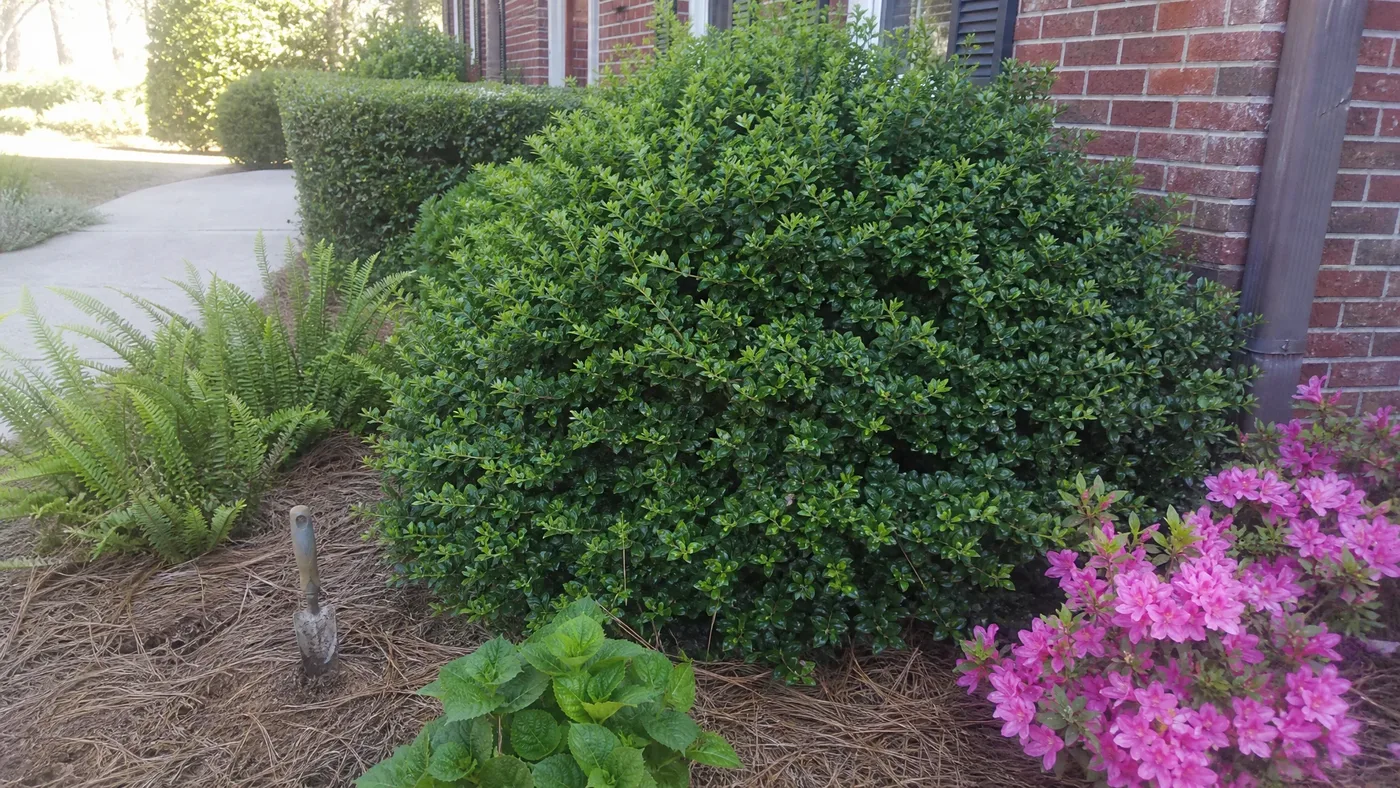
Best Companion Plants to Pair With Compact Japanese Holly
We have knelt in plenty of cramped side beds with a trowel in one hand and a nursery pot in the other, trying to decide what goes beside the holly. The shrub is already in the ground. Whatever you pick next has to live with it for years, through summer dry spells and winter wind.
That decision matters because Compact Japanese Holly is easygoing about most things but picky about two: acid soil and steady moisture. A neighbor that wants the opposite will fail on its own or drag the holly down with it, and you end up with a gap in a bed that was supposed to look finished.
This guide covers everything you need to know about choosing companions for Compact Japanese Holly, from the shared soil and light rules to four real yard situations and a final shopping list.
What Compact Japanese Holly Asks of Its Neighbors
Before you shop, know the terms the holly sets. Every partner has to meet them, whatever the yard looks like.
Acid Soil and Steady Moisture
The cultivar is intolerant of alkaline soil, and it does not tolerate drought either. So look for plants that enjoy acidic ground and stay happy when the soil is evenly moist. Our soil and drainage guide covers how to test and adjust before you plant.
Sun From Full to Part Shade
The holly accepts full sun to partial shade, which gives you a wide palette. Our sun and shade guide sets out the details. In practice, shade-lovers go on the north side of the holly, sun-lovers go on the south, and the holly bridges the two so the bed reads as one planting.
Size in Year Five and Beyond
Plan for the real mature size. This cultivar reaches 6–8 feet tall and 6–10 feet wide, far bigger than the tidy pot suggests. It grows at a medium pace, so the holly will not politely stay small beside slow neighbors. Leave room now or commit to pruning later.
Color Has to Come From the Neighbors
This cultivar is male and bears no fruit, so there are no berries to carry the bed in winter. The flowers are small, white and open in May to June, easy to miss. Think of the holly as the dark green backdrop and choose partners for bloom, berry or bark.
A Narrow Side Bed Beside Compact Japanese Holly
A strip between a fence and a walkway is the toughest spot on this list. Here is how we would work through it, step by step.
Decide How Much Holly the Bed Can Hold
With a potential width of 6–10 feet, one holly can swallow a 3-foot bed. In a strip that tight, plant a single holly at the widest end and shear it on a schedule, or choose a different shrub for the narrowest stretch. Our pruning guide shows how tight you can keep it.
Slim, Shade-Tolerant Partners
Fences throw shade for half the day, so choose plants that take it. Evergreen ferns fill the gaps at the holly's feet without competing for light. Mountain doghobble suits this bed too. It grows best in moist, acidic soils, which is exactly what the holly wants.
Keep the arching shrubs a few feet back from the walkway side, because their stems lean toward the light and will brush anyone walking past.
Layer by Height
Put the holly in the middle, the ferns or other low plants in front, and nothing tall behind it. A holly with open sky above it keeps its dense, rounded shape, while one crowded from behind grows lopsided toward the walkway. Leave a gap between the holly and the fence wide enough to reach in with shears.
Watch the Dry Strip Under the Eave
Narrow beds often sit under a roof edge and stay dry long after a rain. The holly cannot handle drought, so lay a drip line or soaker hose before you plant. A layer of shredded bark mulch helps every plant in the strip hold moisture and keeps weeds out of the tight gaps.
A Windy Corner Lot Planted With Compact Japanese Holly
Corner lots take wind from two directions, and wind dries evergreen leaves fast. Because the holly is prone to winter wind damage, wind stress is the real problem here, not the cold.
Build a Layered Windbreak
Plant the holly in a protected spot, not on the windward side, and tuck softer plants around it. Dense evergreen foliage slows wind better than open, twiggy shrubs. Mountain laurel is a strong partner. It tolerates a wide range of light conditions, from full sun to full shade, and it grows 6–10 feet, so it can anchor the back row.
Stagger Rather Than Line Up
A straight row funnels wind along its length. Set the plants in a loose zigzag with the holly in front and taller shrubs offset behind. The shape looks more natural from the street, and each plant shelters the one downwind. Match the shrubs to your hardiness zone, which for this cultivar runs 6a through 8b.
Mulch and Water Through the First Seasons
Young plants on a windy site lose moisture faster than they can replace it. Use a wide ring of mulch and water deeply during dry spells for the first couple of years, especially going into winter. Ask your local extension service when to stop watering in your area, since that timing changes with climate.
Low-Maintenance Fillers
On a corner lot you want few chores. Pair the holly with other acid-loving evergreens and let mulch do the weeding. Skip anything that needs staking or constant deadheading, because wind will flatten it anyway and you will spend every weekend propping it up.
A Pot on a Hot Deck With Compact Japanese Holly
A deck is the harshest place for roots. Boards and railings radiate heat, and a pot can dry out in a matter of hours.
Heat and Zone Limits
The cultivar may not thrive in areas with high heat and humidity, which describes USDA zones 8 and 9. A pot on a sunbaked deck in a warm zone is the riskiest setup in this guide, so give it afternoon shade if you can. Our container guide covers pot types and sizes.
Pot Size and Watering
Go bigger than looks right. A large pot holds more water, buffers heat and leaves room for a partner. Choose a light-colored pot over a black one, and mulch the soil surface. Check moisture every few days in summer and daily during a heat wave, pushing a finger down to the second knuckle instead of judging by the surface.
Partners That Share the Pot
Pick low plants that like the same acidic, evenly moist mix. Small ferns or trailing evergreen groundcovers work well and hide the bare soil under the holly. Avoid drought-loving plants such as lavender in the same pot, because the holly would go thirsty while the lavender rots in the wet mix.
Winter on the Deck
Roots in a pot are more exposed to cold than roots in the ground. If you garden near the cold edge of the range, group pots together against the house for winter and check our cold-zone advice before you leave a planter out all season.
Deer Pressure Along the Back Fence
If deer cross your yard, the holly alone will not hold. The cultivar is only mildly resistant to damage by deer, which means a hungry herd will sample it. Our deer resistance guide explains how far to trust it.
Highly Resistant Partners
Mountain laurel and mountain doghobble are highly resistant to damage from deer, and both like acidic ground and partial shade. Use them on the outside edge of the planting so deer meet them first and the holly sits behind. Because the holly shares their soil needs, one watering routine covers all three.
Layer the Planting
A deer-resistant screen is a row, not a single plant. Set the resistant shrubs along the fence line, then the holly inside, then low plants at the front. A browsing deer has to push through the toughest plants to reach the softest, and most will not bother.
A Mismatch to Avoid
Lenten rose is deer resistant and shade tolerant, but it wants soil with a neutral to alkaline pH. That is the wrong side of the holly's range. Unless you can give it a separate pocket of soil, pass on it.
Hydrangea, Lavender and Other Common Requests
Three plants come up in almost every conversation about holly neighbors, so here is our answer on each.
Hydrangea Beside Holly
One of the most common questions we get is whether hydrangea and holly mix. Yes, in moist, slightly acid soil with some afternoon shade. Both want even water, so they share a hose happily. Give the hydrangea room to spread, because it will crowd a holly planted too close.
Lavender Beside Holly
We say no. Lavender wants dry, fast-draining soil and the holly wants moist ground. Put lavender in a separate sunny bed with its own soil and keep it a few feet from the holly, where watering for one will not drown the other.
Azaleas and Other Acid Lovers
Azaleas are a safer pick for the sunnier side. They share the acid preference and bloom in spring while the holly is plain. Match the soil first and the bloom second, and the bed will look settled by year three.
Pairings Worth Copying Next Spring
Here are the combinations above, gathered into one list you can take along when you shop.
| Situation | Partner | Why it works |
|---|---|---|
| Narrow side bed | Mountain doghobble, evergreen ferns | Shade-tolerant and happy in moist, acidic soil |
| Windy corner | Mountain laurel | Sturdy evergreen, 6–10 feet, anchors the back row |
| Hot deck pot | Small ferns, trailing evergreens | Same watering needs as the holly |
| Deer fence line | Mountain laurel, mountain doghobble | Both rated highly deer resistant |
| Sunny, moist border | Hydrangea, azalea | Share the acid, moist preference |
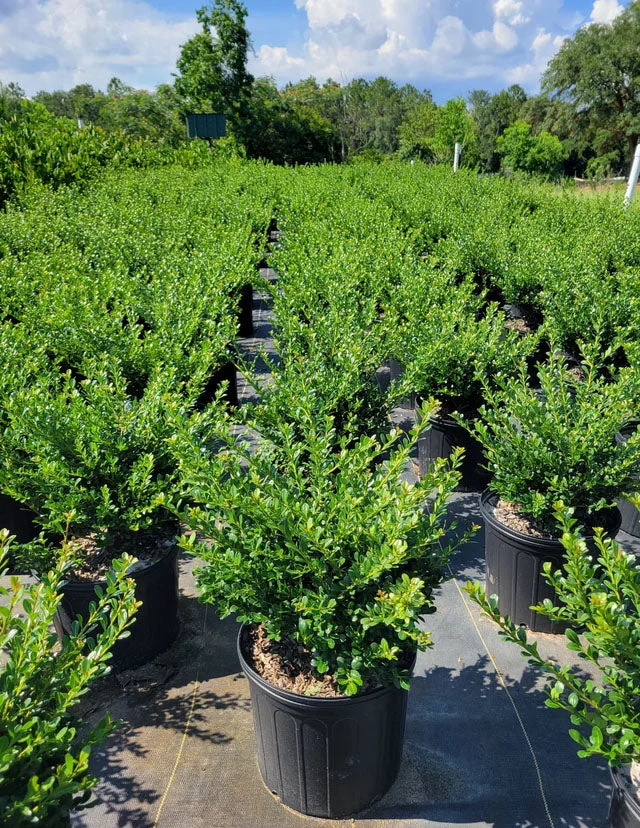
In our rows, the plants that fail beside holly are almost always the ones that wanted drier or sweeter soil. If you still need the holly itself, we grow it to a size that is ready to plant out.
Plan the Bed Around Compact Japanese Holly
Match the neighbors to the holly's acid soil, even moisture and part-sun tolerance, and plan for its mature size of 6–8 feet tall and 6–10 feet wide. Mountain laurel and mountain doghobble cover most situations. Lavender and Lenten rose are the two to avoid.
Compact Japanese Holly
Nursery-grown Compact Japanese Holly in sizes from 1 Gallon Shrub, shipped to your door.
From $80.55
Shop Now →One tip for the weekend: lay the pots out on the ground in their planned spots before you dig a single hole. Before a plant leaves us, our growers check its roots, foliage and shape, because we grow and sell top-quality shrubs we would plant ourselves.